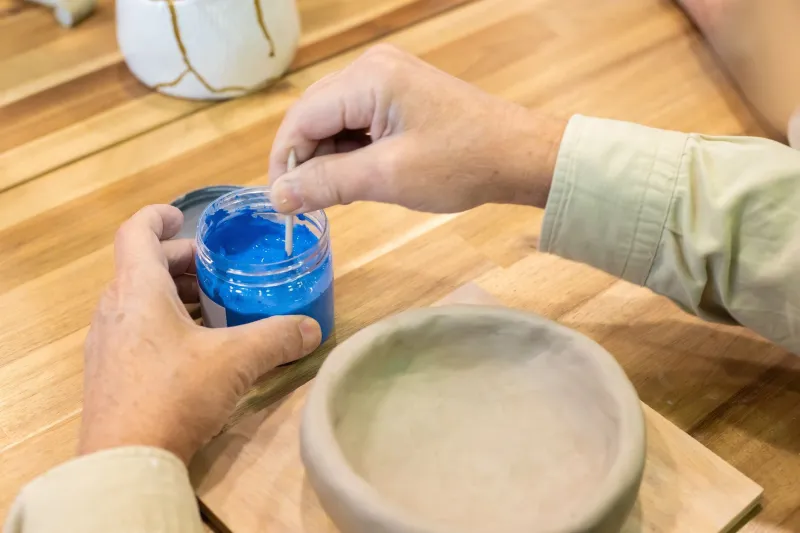
Show Up Not Knowing: What Shoshin Is Teaching Burned-Out Americans About the Joy of Starting Over
There's a moment that happens in almost every beginner Japanese class, somewhere around week three. A student — usually a professional in their 30s or 40s, someone who runs meetings and manages people and hasn't been truly new at something in years — stumbles over a hiragana character they've gotten right a dozen times before. And instead of frustration, they laugh. A real laugh. The kind that surprises them.
That laugh has a name in Zen philosophy. It's called Shoshin — Beginner's Mind — and it might be one of the most quietly radical ideas Japan has exported to America.
What Shoshin Actually Means
The concept comes from Shunryu Suzuki, the Zen Buddhist teacher who brought Japanese meditation practice to San Francisco in the 1960s. His now-famous line — "In the beginner's mind there are many possibilities, but in the expert's mind there are few" — has been quoted in business books and yoga studios and TED talks so often that it risks losing its teeth.
But the actual practice of Shoshin isn't a motivational poster. It's a discipline. It means walking into a room and deliberately setting aside everything you think you already know. It means resisting the urge to map new experiences onto old ones. It means being genuinely okay — not just performatively okay, but actually okay — with confusion, slowness, and looking a little lost.
For a lot of Americans, that's harder than it sounds.
The Competence Trap
We live in a culture that rewards expertise loudly and punishes inexperience quietly. By the time most people hit their late 20s, they've internalized the idea that being good at things is how you earn your place in a room. You build a career, a reputation, an identity around what you know how to do. And slowly, almost without noticing, you stop doing things you're not already good at.
Psychologists sometimes call this the "competence trap" — the way expertise in one area can actually narrow your life, making you less likely to try things that feel unfamiliar or risky. The result isn't just stagnation. For a lot of people, it's a low-grade, hard-to-name unhappiness. A feeling that something has gone flat.
That's the itch that Japanese cultural spaces across the country are quietly scratching.
Walking In Without Armor
Ask around at any Japanese community center that offers beginner programming — calligraphy, ikebana, kendo, tea ceremony — and you'll hear versions of the same story. Adults who signed up for a practical reason ("I'm going to Japan next year," "my kids are half-Japanese," "I needed something to do on Saturdays") and ended up somewhere they didn't expect.
What they find, often, is that the very structure of traditional Japanese arts is built around the beginner's experience in a way that American skill-building rarely is. There's an emphasis on form over result, on repetition as a practice rather than a path to perfection, on the idea that showing up consistently matters more than showing off occasionally.
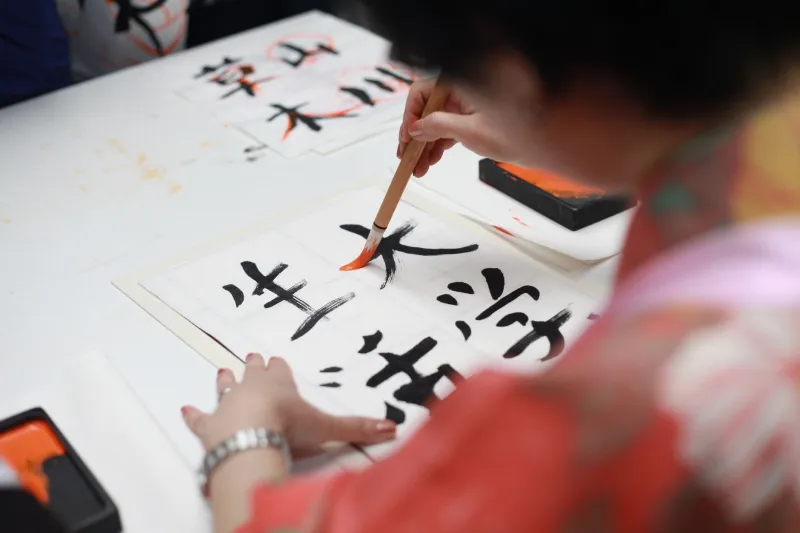
In kendo, you spend months just learning how to stand and how to hold a shinai before you ever swing it at another person. In shodo — Japanese calligraphy — you might spend an entire class on a single brushstroke. In tea ceremony, the movements are so deliberate and so prescribed that there's almost no room for ego to enter. You either follow the form or you don't. And following the form, it turns out, is oddly freeing.
"I kept waiting to feel embarrassed," said one participant at a community shodo workshop in the Seattle area. "But there's nothing to be embarrassed about when everyone's a beginner. And the teacher isn't comparing you to anyone. She's just watching you and the brush."
What It Unlocks at Work — and Everywhere Else
Here's the part that surprises people: practicing Shoshin in a Saturday calligraphy class tends not to stay in the calligraphy class.
There's growing interest among organizational psychologists in what they call "learning agility" — the ability to adapt quickly to new challenges, absorb feedback without defensiveness, and stay curious under pressure. It's increasingly considered one of the most valuable traits in a fast-changing workplace. And it maps almost exactly onto what Shoshin describes.
People who deliberately put themselves in beginner situations — who make a habit of not knowing — report getting better at tolerating ambiguity in their professional lives, too. They become slightly less attached to being right. Slightly more interested in being surprised. That's not nothing. In a work culture that often mistakes confidence for competence, a little more genuine openness can change a lot.
But honestly? The professional benefits might be beside the point. What people talk about most, when they talk about finding Shoshin in a Japanese language class or a martial arts studio, is something simpler. They talk about feeling alive in a way they'd forgotten was possible.
The Permission You Didn't Know You Needed
One of the stranger gifts of Beginner's Mind is that it reframes failure entirely. In a Shoshin practice, getting something wrong isn't a setback — it's just information. You mispronounce a word, you bow at the wrong moment, you pour the tea in the wrong order. And then you do it again. There's no penalty. There's barely even a judgment. There's just the next attempt.
For adults who've spent years in environments where mistakes have real consequences — professional, social, financial — that's not a small thing. It's a kind of psychological permission slip. You're allowed to be here even though you don't know what you're doing yet. You're allowed to take up space in the learning process without having already arrived.
Japanese cultural communities around the US, many of them built on exactly this philosophy of patient, form-centered practice, are increasingly becoming places where that permission is handed out freely. Not because they're trying to offer therapy or life coaching. Just because the traditions themselves were built that way.
An Open Door
If any of this sounds like something you've been missing, the entry point is closer than you think. Community centers, cultural organizations, and independent studios in most major American cities offer beginner programming rooted in Japanese arts and practices. You don't need a connection to Japanese heritage. You don't need prior experience. You don't need to be ready.
You just need to show up empty.
That's the whole practice, really. Walk in without your credentials. Set down whatever you're already good at. Let yourself be a beginner again — genuinely, uncomfortably, joyfully new.
In the beginner's mind, as Suzuki said, there are many possibilities.
Turns out he wasn't just talking about Zen.