Broken and Beautiful: Why Americans Are Learning to Mend with Gold
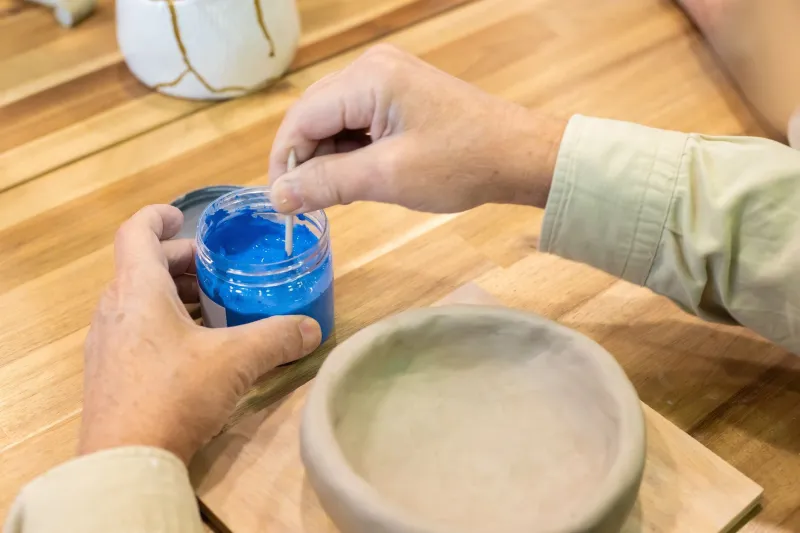
Somewhere in a ceramics studio in Portland, Oregon, a woman is carefully painting a hairline fracture in a coffee mug with urushi lacquer. The mug belonged to her late mother. It slipped from her hands the morning of the funeral. She has been carrying both the mug and the guilt about dropping it for three years.
Today, she is filling that crack with gold.
"I didn't come here to fix the mug," she says, not looking up from her work. "I came here because I needed to stop feeling like broken things should be thrown away."
This is kintsugi — the centuries-old Japanese craft of mending fractured ceramics with lacquer mixed with powdered gold, silver, or platinum. Translated loosely, the word means "golden joinery" or "to repair with gold." The philosophy behind it is older than the technique itself: breakage is part of an object's story, not a flaw to be hidden.
In Japan, kintsugi traces back to the 15th century, reportedly born when a shogun sent a damaged tea bowl to China for repairs and received it back held together with ugly metal staples. Japanese craftsmen, the story goes, decided there had to be a more beautiful way. What emerged was a method that didn't just restore broken things — it transformed them.
Now, that philosophy is finding a deeply receptive audience in the United States.
A Craft That Arrived at the Right Moment
Kintsugi workshops have been popping up in American cities with quiet but steady momentum — in community art centers, yoga studios, Japanese cultural organizations, and even corporate wellness programs. Cities like San Francisco, Chicago, Seattle, New York, and Denver have seen studios add kintsugi to their offerings in the last several years, and waitlists at some workshops have grown surprisingly long.
The timing is not accidental. Americans are exhausted. The last several years have delivered loss, disruption, and a collective reckoning with the limits of the "push through it" mentality. A craft that literally asks you to sit with something damaged, acknowledge the damage, and then make it beautiful — that lands differently right now.
"People come in thinking they're signing up for a pottery class," says Mia Tanaka, who teaches kintsugi workshops through a Japanese cultural center in the Bay Area. "They leave having had a conversation they didn't know they needed to have with themselves."
Tanaka started offering workshops five years ago after incorporating kintsugi into her own life following a difficult divorce. She noticed that the act of mending — slow, deliberate, requiring patience — created a particular kind of quiet that her students seemed to be starving for.
"It's not a quick process. You can't rush the lacquer. You can't skip steps," she explains. "And I think for a lot of Americans, that's actually the point. We're not used to sitting with something broken and just... being with it."
More Than a Craft: The Mental Health Connection
Therapists and mental health practitioners have started paying attention.
Dr. Renata Flores, a licensed therapist in Chicago who works primarily with adults navigating grief and major life transitions, began incorporating kintsugi-themed exercises into her practice after a client brought a repaired bowl to a session and used it to describe their healing process.
"There's a concept in trauma work called post-traumatic growth — the idea that people can emerge from difficulty with a deeper sense of self, stronger relationships, or new meaning," Dr. Flores explains. "Kintsugi is essentially a physical metaphor for that process. It makes the abstract visible."
She now occasionally recommends kintsugi workshops to clients who are struggling to articulate their experiences verbally. "For some people, doing is easier than saying. Working with their hands gives them access to feelings that talking hasn't unlocked."
This intersection of craft and emotional processing is showing up in other spaces too. A veterans' support group in San Diego has incorporated kintsugi into a broader art therapy program. A grief support circle in Minneapolis uses it as a closing ritual at the end of a six-week program. A high school art teacher in Austin has introduced it into a unit on resilience, asking students to bring in something broken from home.
"The conversations that came out of that project," the teacher wrote in a community newsletter, "were unlike anything I've seen in fifteen years of teaching."
Who's Showing Up
Ask any kintsugi instructor in America who walks through their door and you'll get a strikingly varied answer.
There are the ceramics enthusiasts who stumbled across kintsugi online and wanted to try it with a beloved cracked bowl. There are the people going through major transitions — divorce, job loss, illness, bereavement — who found the workshop through a therapist or a friend. There are the Japanese Americans who grew up hearing about kintsugi from family and finally wanted to connect with it directly. And there are the people who show up with no particular reason they can name, just a feeling that something about the idea called to them.
"I had a guy come in last month — big guy, works in construction, brought his kid's broken piggy bank," recalls James Okafor, who runs kintsugi workshops out of a community arts space in Atlanta. "He barely talked the whole session. At the end, he just held up the piggy bank and said, 'I can't believe how good it looks.' But the way he said it — I don't think he was just talking about the piggy bank."
Okafor, who has no Japanese heritage but has studied the craft extensively and teaches it with what he calls "deep respect for where it comes from," says he is careful to frame kintsugi within its cultural context. "This is a Japanese philosophy, a Japanese art form. Part of what I do is make sure people understand that. We're borrowing something meaningful, and we should know what we're borrowing."
The Object as Teacher
There's something quietly radical about what kintsugi insists on: that the history of damage is worth preserving. In a culture that prizes newness, seamlessness, and the appearance of effortless wholeness, the idea that your cracks make you more interesting — more you — is genuinely countercultural.
A repaired kintsugi bowl is not restored to its original state. It is transformed into something different, something that could not have existed without the breaking. The gold seams are not a cover-up. They are the whole point.
For many Americans encountering kintsugi for the first time, this reframe hits somewhere personal. The broken thing on the table in front of them — a mug, a plate, a vase — becomes a proxy for something else. A relationship. A career. A version of themselves they thought they'd lost.
"I've watched people cry over a teacup," says Tanaka. "And it's never really about the teacup."
If you're curious about kintsugi workshops near you, many Japanese cultural organizations and community art centers across the US now offer beginner sessions. A quick search for kintsugi classes in your city — or a check with your local Japanese American cultural association — is a good place to start. Some workshops provide all the materials; others ask you to bring something of your own that needs mending.
Either way, you'll leave with something golden.