Neighbors by Design: What Japanese Chonaikai Can Teach Americans About Actually Knowing Who Lives Next Door
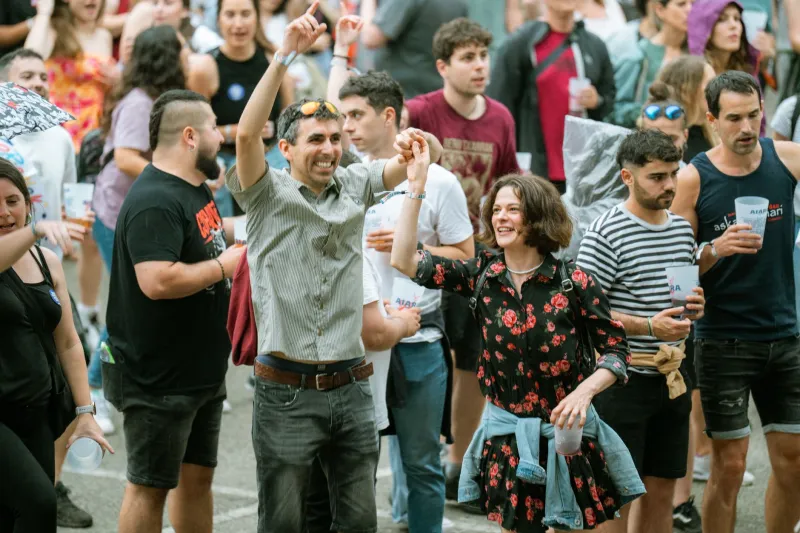
Marcus Webb moved into his rowhouse in Baltimore's Remington neighborhood in 2019. He knew the couple directly to his left within about a week. The family to his right took a little longer. Everyone else on the block? Strangers, more or less, for the better part of two years.
"I'd wave at people. Maybe nod," he says. "But I didn't really know anyone. And after a while, I started to wonder — is this just how it is now?"
It's a feeling a lot of Americans recognize. Somewhere between the rise of remote work, the retreat into private screens, and the slow erosion of third places, the neighborhood — as a lived, felt, functional unit — has quietly hollowed out. We share zip codes. We don't always share much else.
But Marcus stumbled onto something that gave him a different frame for thinking about it. While researching urban planning models for a community college course he was auditing, he came across the Japanese concept of chonaikai — and it stopped him cold.
What Chonaikai Actually Is
The word roughly translates to "neighborhood association," but that clinical description undersells what these groups actually do. Chonaikai are hyperlocal civic organizations that exist at the scale of a few city blocks, sometimes just a single apartment complex or a cluster of homes. They organize seasonal festivals, coordinate disaster preparedness, manage local bulletin boards, facilitate communication between residents and city government, and — maybe most importantly — create a structured reason for neighbors to show up for each other on a regular basis.
They're not new. Chonaikai in some form have existed in Japan for centuries, evolving from feudal-era village governance structures into the remarkably durable civic institutions they are today. Membership is typically voluntary but culturally expected. Dues are modest. The work is shared.
What makes them distinct isn't their bureaucratic function — it's their scale. Chonaikai operate at the level where you can actually recognize faces. Where the person organizing the summer festival is also the person you pass walking to the train. That intimacy is the whole point.
Americans Who Are Paying Attention
Marcus isn't alone in finding the model compelling. Across the country, a loose but growing network of community organizers, urban planners, and plain old frustrated residents are drawing on chonaikai principles — sometimes explicitly, sometimes intuitively — to rebuild neighborhood life from the ground up.
In Portland, Oregon, a woman named Diane Okafor spent three years trying to resuscitate her block association before she reframed the whole effort around something smaller and more immediate. "We kept trying to get people excited about big meetings, big agendas," she says. "Nobody came. So I started thinking about what actually works — what gets people out of their houses."
What worked, it turned out, was a quarterly block cleanup followed by a shared meal. Simple, recurring, low-stakes. She'd read about chonaikai through a Japanese American neighbor who had grown up participating in one in Osaka, and the philosophy clicked: don't build the community and then do the activity. Do the activity and let the community build itself around it.
Her block now has a group text with 34 households on it. They've organized two tool-lending arrangements, a produce swap during the summer, and a phone tree for checking on elderly neighbors during heat events. "It didn't take a grant or a nonprofit," Diane says. "It just took a reason to show up together, over and over."
The Mutual Aid Layer
One of the most quietly radical elements of chonaikai is their approach to mutual aid — the idea that neighbors aren't just people who happen to share a street, but a network of people who have implicit obligations to each other's wellbeing.
In Japan, this plays out in small but meaningful ways: checking in on elderly residents, sharing information about local safety concerns, coordinating responses to flooding or earthquakes. It's not charity. It's infrastructure.
That framing has resonated deeply with organizers in cities like Detroit and New Orleans, where formal civic infrastructure has historically been underfunded and communities have long had to improvise. Keisha Tran, who runs a neighborhood group in the Tremé area of New Orleans, describes what she's built as "a chonaikai with a New Orleans soul."
"We do the block parties, we do the second lines, we do the food," she says. "But we also do the practical stuff — who needs a ride to the doctor, who just lost their job, who's got a generator when the power goes out. That's the part I learned to be intentional about. You have to build the system for that, or it doesn't happen."
The Festival Function
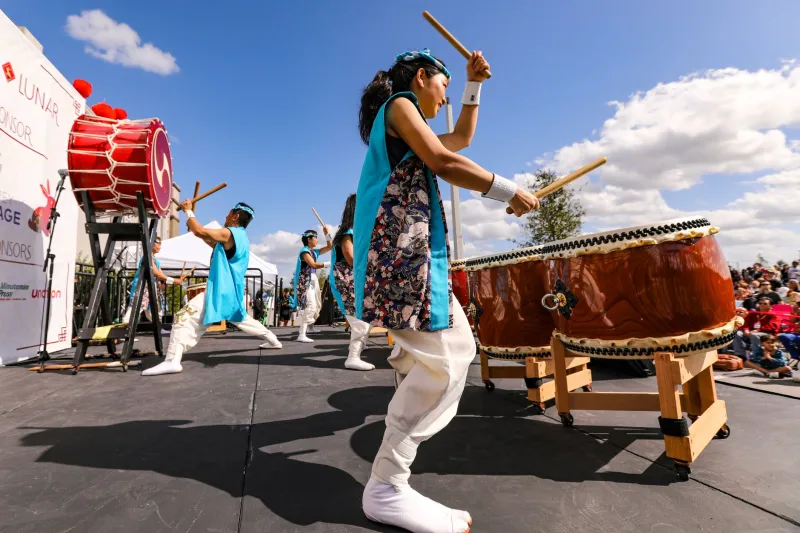
Ask anyone who's participated in a chonaikai in Japan, and they'll tell you the festivals are where the magic happens. Matsuri — seasonal community festivals organized at the neighborhood level — aren't just fun. They're the annual proof that the association exists, that it works, that people still want to be part of it.
Americans are starting to rediscover this logic. In Chicago's Andersonville neighborhood, a block association that was struggling to maintain engagement revived its annual summer block party with a deliberate new framework: everyone brings a dish connected to their family's heritage, there's a shared activity for kids, and — crucially — the event is organized and run by rotating volunteer committees from different households each year.
"The rotating part was the key," says one of the organizers, a retired teacher named Phil Nakamura whose Japanese American family has lived in the neighborhood for three generations. "When you've had to actually do the work of putting something together, you feel ownership over it. You come back the next year. You bring people."
Phil grew up hearing his grandmother talk about the neighborhood associations she'd participated in before the war — a history interrupted by incarceration and dispersal that still aches. Helping rebuild something like that, even in a different American context, feels meaningful to him. "It's not about recreating Japan," he's careful to say. "It's about taking a good idea seriously."
Starting Where You Are
The chonaikai model isn't a plug-and-play solution. American neighborhoods are more diverse, more transient, and more politically complicated than most Japanese ones. Trust takes longer to build. Participation can't be assumed.
But the core insight — that community at the scale of a few blocks, organized around recurring shared activity, with a mutual aid backbone and a reason to celebrate together — translates pretty cleanly. You don't need a formal charter. You don't need a budget. You need a first event, a group chat, and a reason to do it again.
Marcus Webb eventually organized a simple block cleanup in Remington. Then a cookout. Then a winter holiday card exchange. His block now has something that feels, if not exactly like a chonaikai, then at least like the beginning of one.
"I know my neighbors now," he says. "I mean, I actually know them. That sounds like a small thing. It doesn't feel small."
It isn't. And if a centuries-old Japanese civic tradition is part of what helped get us there, that feels like exactly the kind of cultural exchange worth celebrating.