One Brushstroke at a Time: Why Americans Are Gathering Around Shodo — and What They're Finding There
One Brushstroke at a Time: Why Americans Are Gathering Around Shodo — and What They're Finding There
There's a moment, regulars will tell you, that happens somewhere around the third or fourth session. You've stopped apologizing for your handwriting. You've stopped comparing your characters to the instructor's. And then the brush touches the paper — and for a few seconds, everything else just disappears.
That moment is why shodo circles are quietly multiplying across the United States. From community centers in the Pacific Northwest to library meeting rooms in the Midwest, small groups of Americans are sitting down with ink, brushes, and wide sheets of washi paper, learning an art form that's been practiced in Japan for well over a thousand years. And almost none of them will tell you they came for the calligraphy.
What Shodo Actually Is — and Isn't
Shodo (書道) translates roughly as "the way of writing," but calling it handwriting misses the point almost entirely. It's closer to a moving meditation — a discipline rooted in Zen practice, where the quality of a character is inseparable from the mental state of the person making it. Tension in your shoulders shows up in the stroke. Rushing shows up on the paper. You can't hide from shodo the way you can hide from a keyboard.
That transparency is exactly what draws people in, says Noriko Hashimoto, a Japanese American instructor who has been teaching shodo in the San Francisco Bay Area for over fifteen years. "In Japan, children learn shodo in school. It's tied to discipline, to patience, to respect for the written word," she explains. "But here, the people who come to me as adults — they're not coming because someone told them to. They're coming because something is missing, and they can feel it."
What's missing, more often than not, is slowness. Intentionality. The sensation of making something with your hands that cannot be undone with a backspace key.
The Digital Exhaustion Factor
It would be hard to overstate how much the current moment is shaping who walks through the door at these gatherings. Americans are increasingly aware — sometimes acutely so — that their attention has been fragmented, their leisure time colonized by screens, and their sense of craft quietly eroded by convenience. Shodo sits at the opposite end of that spectrum in almost every way.
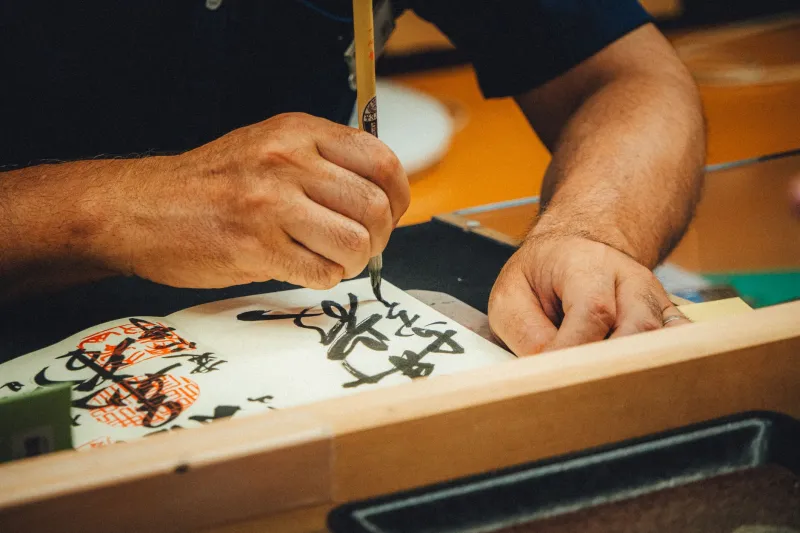
A brushstroke is irreversible. You can't edit it, filter it, or undo it. The ink commits the moment it hits the paper, and the paper holds everything — the hesitation, the confidence, the small tremor of a distracted mind. For people who spend their days editing, deleting, and optimizing, that permanence feels radical.
"I work in tech," says Marcus Webb, a 34-year-old software engineer who joined a shodo group in Portland, Oregon, after seeing a flyer at his local Japanese American community center. "Everything I do at work is reversible. There's always version control, always a rollback. In shodo, there isn't. And weirdly, that's the part I love most. It forces you to commit."
That commitment — to the stroke, to the moment, to the imperfect thing you just made — seems to be the emotional core of what people are finding in these circles.
Living Rooms, Libraries, and Community Halls
Not all shodo circles look the same. Some are organized through established Japanese American cultural organizations, with formal instruction and structured curricula. Others are looser — a handful of friends who found an instructor through a community board post, meeting every other Saturday in someone's living room.
In Chicago, a group called Fude & Friends has been meeting monthly at a Japantown-adjacent community space for three years. It started with seven people; it now draws close to thirty on a good night, with a waiting list for beginners. The organizer, a second-generation Japanese American named Yuki Tanaka, says she didn't expect the demand.
"I thought maybe a few Japanese American folks would want to reconnect with something from their heritage," she says. "But it became this really mixed group — people from all kinds of backgrounds, all ages. A lot of them had never written a single kanji before they walked in."
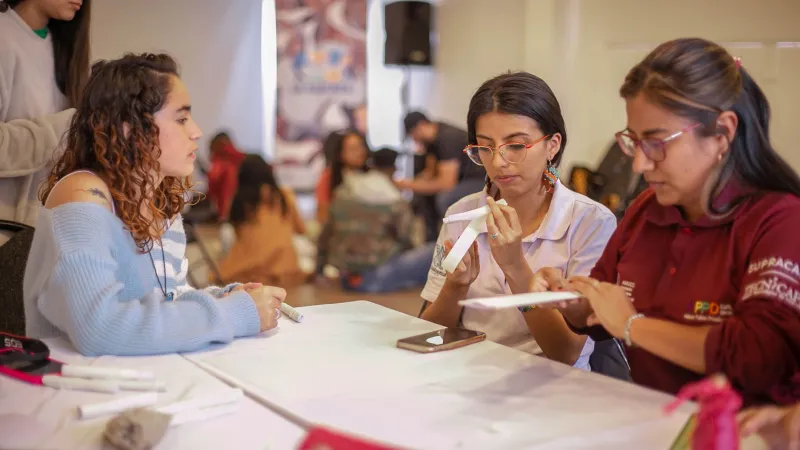
That mix is part of what makes these circles feel like genuine community spaces rather than cultural exhibitions. Beginners and more experienced practitioners sit side by side. The atmosphere is relaxed but focused. People talk between strokes, share tea, and sometimes sit in near-silence for long stretches — which, in a social setting, feels unexpectedly comfortable.
The Instructors Holding the Thread
For Japanese American instructors like Hashimoto, teaching shodo to a broader audience carries a certain weight. There's the responsibility of representing a tradition accurately — the history, the aesthetics, the philosophy — while also making it genuinely accessible to people who didn't grow up with it.
"I never want it to feel like a performance of Japanese culture," Hashimoto says. "Shodo is a living practice. It changes when different people bring themselves to it. That's not a corruption of the tradition — that's how traditions survive."
She's careful to teach the foundational concepts: the importance of posture, the way you hold the brush, the relationship between breathing and movement. But she's also learned to leave room for what students bring with them — their stories, their frustrations, the particular way someone's grief or joy shows up in how they drag a brushstroke across the page.
"Sometimes a student will make a character that's technically imperfect but has something alive in it," she says. "And I don't correct it. I just ask them what they were thinking about when they made it."
What People Are Actually Writing
Beginners typically start with simple characters — ones with fewer strokes, clear structure, and immediate visual satisfaction. 山 (mountain). 水 (water). 心 (heart/mind). But as practitioners grow more comfortable, the choices become more personal.
Some people work toward writing a word that carries meaning for them — a name, a concept they're wrestling with, a phrase from a poem. Others focus purely on form, treating each session as an exercise in presence rather than expression. Both approaches seem to produce something valuable.
"I wrote 忍 — perseverance — about a hundred times the week my dad was sick," Marcus Webb recalls. "I don't know if it helped in any practical sense. But it gave me something to do with my hands that felt like it mattered."
That might be the most honest summary of what shodo circles are offering Americans right now: something to do with your hands that feels like it matters. In a culture that has optimized nearly every form of productivity and streamlined nearly every form of leisure, the slow, deliberate, beautifully impractical act of writing with a brush feels less like a hobby and more like a small act of resistance.
Finding Your Circle
If you're curious about shodo, the best entry point is usually a local Japanese American cultural organization or community center — many offer introductory workshops or can point you toward ongoing groups. Libraries in cities with significant Japanese American communities often host calligraphy events, particularly around cultural observances. Online communities have also helped people connect with instructors for virtual sessions, which has expanded access considerably for people in areas without established groups.
You don't need experience. You don't need to read Japanese. You don't even need particularly steady hands.
You just need to show up, pick up the brush, and be willing to leave a mark you can't take back. That, it turns out, is more than enough to start.