Just One Sheet of Paper: The Quiet Revolution Happening at Origami Meetups Across America
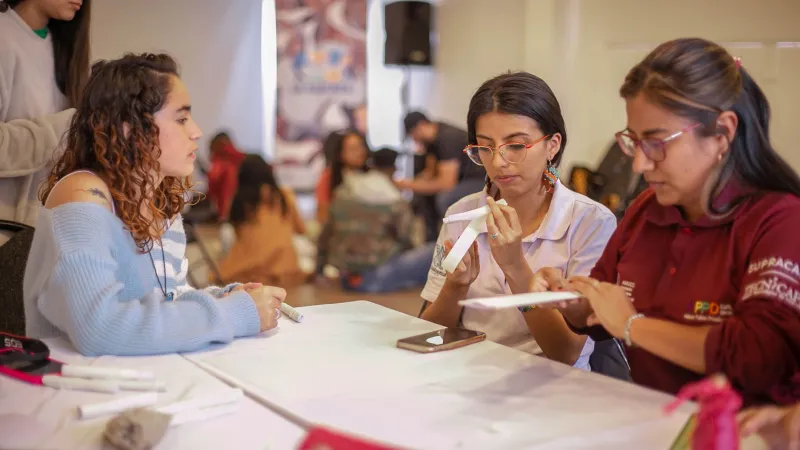
Nobody walks into their first origami meetup thinking it's going to matter. They show up because a friend mentioned it, or they saw a flyer at the library, or they were honestly just looking for something — anything — to do on a slow Saturday. They sit down, they pick up a square of paper, and then two hours disappear.
That's the thing nobody tells you about origami circles. The craft is almost beside the point.
Across the United States, small community folding groups are quietly multiplying. They're not flashy. They don't trend on social media. But they keep meeting, week after week, in borrowed rooms and neighborhood living rooms — and the people who show up keep coming back. Understanding why says something interesting about what Americans are actually looking for right now.
A Table Full of Strangers With Something in Common
Walk into a typical origami meetup and you'll notice the mix immediately. Retirees sitting next to college students. A software engineer next to a preschool teacher. People who've been folding for decades alongside people who can barely remember how to make a basic boat.
What's striking is how fast the awkwardness dissolves. There's something about having your hands busy and your eyes focused on the same small task that lowers the social temperature of a room almost instantly. Conversations start not because anyone is trying to network or make a good impression, but because someone needs help with a tricky step and the person next to them happens to know the answer.
That low-stakes entry point matters more than it might seem. In a culture where socializing often comes loaded with expectations — be interesting, be productive, perform your personality — sitting down to fold paper together removes almost all of that pressure. You're just two people trying to figure out a reverse fold.
Why Origami, and Why Now
Origami has deep roots in Japanese culture, tied historically to ceremony, spirituality, and the kind of slow, intentional making that modern life tends to crowd out. The word itself combines oru (to fold) and kami (paper) — simple components that together become something more. Japanese American communities have long carried these traditions forward in the US, and many of today's origami circles trace their lineage, directly or indirectly, to that cultural stewardship.
But something has shifted in recent years. The people showing up to these groups aren't just enthusiasts of Japanese culture or dedicated hobbyists. They're nurses coming off brutal shifts. Parents of young kids who need two hours where nobody needs anything from them. Remote workers who've realized their apartment has become both office and prison and they need to be somewhere, with people, doing something with their hands.
Origami, it turns out, is remarkably good at delivering on all of those needs simultaneously. The repetitive motion is genuinely calming — close enough to meditation that some practitioners describe a similar mental clearing. The tactile engagement pulls you out of your head in a way that scrolling a phone never does. And the social structure of a group session provides just enough human contact without demanding emotional labor.
Profiles in Folding: Three Groups Finding Their People
The Tuesday Night Folders, Minneapolis — What started as a six-person gathering in a Japanese American community center has grown to over forty regular participants. The organizer, a retired librarian who learned origami from her grandmother, says she never expected it to become what it is. "People come for the paper," she laughs. "They stay for each other." The group has become a kind of informal support network — members have helped each other move apartments, navigate health scares, and get through long winters.
Paper & Presence, Oakland — This group explicitly frames its sessions around the meditative dimension of origami practice, drawing on Japanese concepts of ma (meaningful pause) and mindful making. Sessions begin with five minutes of silence before anyone picks up paper. The founder, a Japanese American artist, wanted to create something that honored the cultural depth of the practice rather than treating it as a novelty. The waitlist for new members is currently three months long.
The Saturday Fold, Brooklyn — Less formal than either of the above, this group meets in a rotating cast of apartments and occasionally a local café. There's no curriculum, no instructor, just people at different skill levels sharing what they know. A Pakistani American member who joined two years ago says it's the most genuinely diverse social space she's found in New York. "Everyone's focused on the same small thing. It's weirdly equalizing."
The Thing That Keeps People Coming Back
Ask long-term origami circle members what keeps them returning, and almost none of them lead with the craft. They talk about the people. They talk about the feeling of an hour passing without checking their phone. They talk about finishing something small and holding it in their hand and feeling, briefly, like that was enough.
There's something in that worth paying attention to. Americans are increasingly aware that something about modern social life isn't working — that despite being more connected than ever, actual community feels harder to find. What origami circles seem to offer is a workaround: a structured reason to be in the same room with people, a shared focus that makes conversation feel natural rather than forced, and an activity that rewards patience in an environment that rarely does.
The Japanese cultural roots of the practice aren't incidental to any of this. Origami carries within it a whole philosophy of careful attention — to the paper, to the process, to the person sitting next to you. That's not something you can fully separate from the folding itself, even if you came in just looking for something to do on a Saturday.
How to Find Your People
If any of this sounds appealing, the good news is that origami circles are easier to find than you might think. The Origami USA organization maintains a community directory, and many Japanese American cultural centers — including those connected to the Kouenkai network — host regular folding sessions open to all skill levels and backgrounds.
You don't need to know anything going in. You don't need special paper or prior experience or a particular reason for being there. You just need to show up and sit down.
The paper will do the rest. And so, probably, will the person folding next to you.