More Than a Pretty View: How Japanese American Gardens Are Becoming the Community Spaces We Didn't Know We Needed
More Than a Pretty View: How Japanese American Gardens Are Becoming the Community Spaces We Didn't Know We Needed
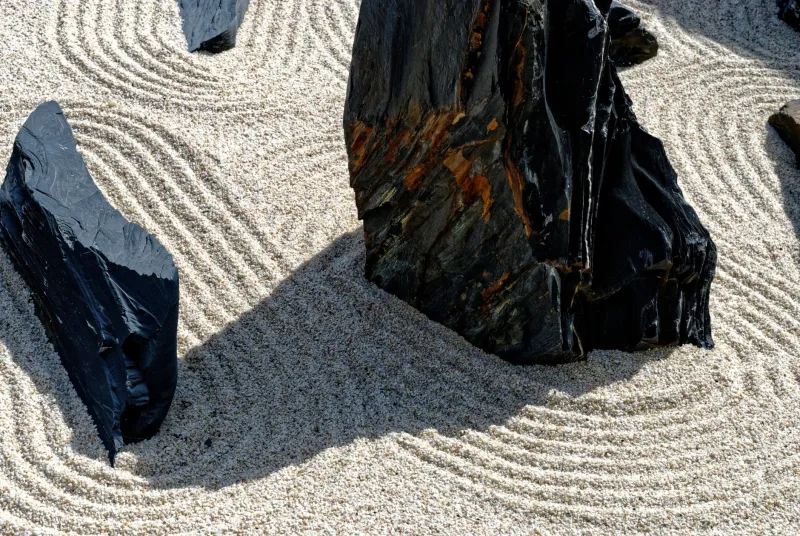
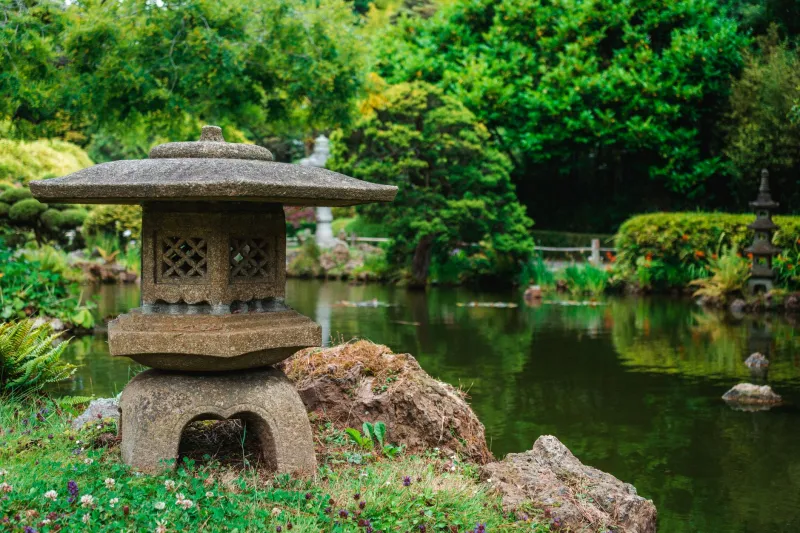
There's a particular kind of quiet you find inside a Japanese American garden. Not the silence of emptiness, but something more deliberate — the kind that makes you slow down before you even realize you've done it. The raked gravel, the mossy stones, the water that moves just enough to remind you it's alive. Most people walk through and call it beautiful. A growing number are starting to call it home.
Across the United States, Japanese American gardens are in the middle of a quiet but meaningful shift. What once functioned primarily as cultural landmarks or horticultural showpieces are now becoming something harder to categorize — and far more valuable. They're hosting school field trips that turn into year-long mentorships. They're holding space for grief. They're the backdrop for neighborhood potlucks, youth taiko workshops, and first-generation Americans reconnecting with practices their grandparents never had the chance to teach them.
This isn't a renovation story. The gardens haven't changed much. The communities around them have.
From Ornament to Organism
The history of Japanese American gardens in the US is complicated in ways that most visitors never see. Many were established in the postwar decades, built by Japanese Americans who had just emerged from the trauma of incarceration and were quietly, persistently reasserting their cultural presence in cities that had tried to erase it. Others were gifts from sister cities in Japan, diplomatic gestures that took root in public parks and university campuses. A handful were private labors of love that eventually opened their gates to the public.
For a long time, these gardens occupied a strange middle ground — celebrated aesthetically, but somewhat disconnected from the living communities they were meant to honor. They were places you visited on a Sunday afternoon, not places you returned to every week.
That's changing, and the shift is happening from the ground up.
In Portland, Oregon, the Portland Japanese Garden — one of the most visited cultural sites in the Pacific Northwest — has spent the last several years deliberately expanding its programming beyond garden tours. Traditional tea ceremony demonstrations have evolved into participatory workshops. Educational partnerships with local schools now include multi-visit programs where kids learn about seasonal change, Japanese aesthetics, and the concept of ma — the art of meaningful negative space — through hands-on experiences in the garden itself. Educators say something shifts in students when they're learning outdoors in a space that asks them to be present.
The People Who Stay
Every garden has its regulars — the people who show up not just once, but again and again. Talk to the staff and volunteers at Japanese American gardens around the country, and they'll tell you about them: the elderly Nisei woman who comes every Tuesday to sit by the koi pond because it reminds her of her mother's garden in California before the war. The young Mexican American man in Denver who started volunteering after stumbling onto a raking demonstration and found, unexpectedly, that the meditative rhythm of the work helped him manage his anxiety. The multigenerational family in Brooklyn who hosts their annual New Year gathering in the garden because it's the one place that feels ceremonial enough for the occasion.
These aren't outliers. They're the emerging core of what these gardens are becoming.
In the San Francisco Bay Area, the Japanese Tea Garden in Golden Gate Park — the oldest public Japanese garden in the United States — has seen a steady increase in community-led programming in recent years. Local Japanese American organizations use the space for cultural education events. Wellness groups have begun holding mindfulness sessions in the early morning hours before the crowds arrive. And every spring, the cherry blossom season draws not just tourists but neighbors who've made the ritual their own, bringing blankets and homemade food in a tradition that feels less like tourism and more like hanami — the Japanese practice of flower viewing as communal celebration.
Healing in the Moss
One of the more unexpected developments in recent years is the use of Japanese American gardens as spaces for grief and emotional recovery. It makes a certain intuitive sense — these are environments deliberately designed to evoke transience, the beauty of impermanence, the dignity of things that don't last. The Japanese concept of mono no aware, often translated as a gentle sadness at the passing of things, is literally built into the landscape.
Some gardens have begun formalizing this. Grief support groups, often organized through local hospice networks or community mental health organizations, have started meeting in garden spaces, finding that the natural environment offers something that a conference room simply can't. The garden doesn't try to fix anything. It just holds you while you sit with what's hard.
Cultural organizations affiliated with several Japanese American community centers have noted similar patterns — veterans' groups, cancer survivor circles, and caregiver support networks gravitating toward garden settings for their gatherings. There's something about the intentionality of these spaces, the sense that every stone and plant was placed with care, that seems to communicate to visitors that their presence also matters.
Stewardship as Cultural Practice
Maintaining a Japanese garden is not a passive undertaking. The pruning techniques, the raking patterns, the seasonal adjustments — all of it requires knowledge that was traditionally passed down through apprenticeship over years, sometimes decades. In the US, that transmission of knowledge has often been fragile, interrupted by history and geography.
What's emerging now is a new model of stewardship, one that's more explicitly communal and more openly educational. Volunteer programs at gardens across the country are drawing in participants from wildly diverse backgrounds — Japanese Americans reconnecting with heritage, non-Japanese Americans drawn by a genuine love of the craft, horticulture students, retirees looking for purpose, teenagers doing community service hours who end up staying long after the requirement is met.
The gardens themselves are becoming classrooms, not just for Japanese aesthetics but for a whole philosophy of care — the idea that tending something consistently, attentively, and without rush is its own form of meaning-making. In a culture that defaults to speed and productivity, that's a quietly radical message.
Why This Matters Right Now
Americans are hungry for communal spaces that feel intentional. The rise of third-place culture — the idea that we need places beyond home and work where we can simply be with others — has been a running conversation for years, accelerated sharply by the isolation of the pandemic era. Japanese American gardens, it turns out, are extraordinarily well-suited to fill that gap.
They're free or low-cost to access. They're intergenerationally welcoming. They model, in their very design, the values that many people are consciously trying to cultivate: slowness, attention, reciprocity, care. And they carry a cultural story that, when told well, opens up rather than closes down — inviting visitors into a living relationship with Japanese American history rather than treating it as something sealed off behind glass.
The gardens were always there. It just took us a little while to understand what they were really offering.
If you haven't visited the Japanese American garden nearest to you lately — or ever — consider this your invitation. Go on a weekday if you can. Sit somewhere for longer than feels comfortable. Notice what changes. And if there's a program, a workshop, a community event on the calendar, think about showing up for that too.
The garden will be better for it. And honestly? So will you.