Something You Can Hold: Why Imperfect Japanese Pottery Is Changing the Way Americans Start Their Day
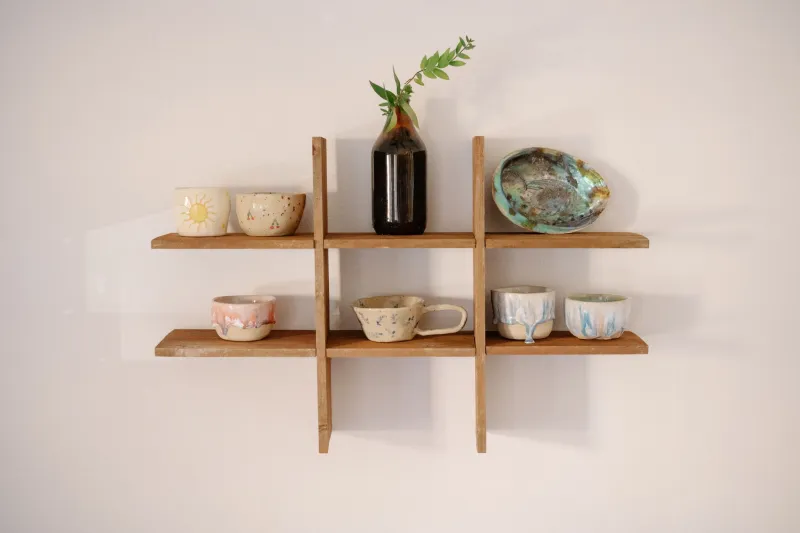
There's a particular moment that a lot of people describe the same way. You're standing in a small studio, or maybe browsing a craft market, and you pick up a bowl — a Japanese-style chawan, or maybe just a hand-thrown cup glazed in uneven ash gray. It's heavier than you expected. The rim dips slightly on one side. There's a small dimple near the base where a thumb pressed in during shaping. And something in you just... settles.
That's the moment a lot of Americans say they understood, for the first time, what wabi-sabi actually means — not as a design trend or a Pinterest aesthetic, but as a lived feeling.
Across the country, Japanese ceramics are quietly finding new homes. Not in curio cabinets or behind museum glass, but in kitchen cabinets, on breakfast tables, cradled in both hands over morning tea. The people drawn to them aren't necessarily collectors or Japan scholars. They're just people who are tired of things that feel like nothing.
What Wabi-Sabi Actually Is (and Isn't)
The phrase gets thrown around a lot in American design circles, usually as shorthand for "rustic" or "imperfect on purpose." But the philosophy behind it runs considerably deeper than an aesthetic choice.
Wabi-sabi is rooted in a Japanese worldview that finds beauty precisely in transience and imperfection — in the crack in a wall, the asymmetry of a hand-shaped vessel, the way a glaze breaks differently depending on where it sat in the kiln. It's less about making things look rough and more about accepting that nothing is permanent, nothing is flawless, and those facts are not tragedies. They're the whole point.
In Japanese ceramic tradition, this philosophy shows up most visibly in raku ware — low-fired, hand-shaped tea bowls with unpredictable surfaces — and in the practice of kintsugi, the art of repairing broken pottery with gold-dusted lacquer, making the fracture itself a feature. The broken thing isn't hidden. It's honored.
For Americans living through a period of algorithmic perfection — filtered photos, AI-generated imagery, products engineered to look identical across millions of units — the contrast hits differently.
The Potters Bridging Two Traditions
In studios from Asheville to Portland to the Hudson Valley, a generation of American ceramicists has spent years studying Japanese techniques — not to replicate them exactly, but to absorb something essential about slowness and intention.
Many have trained in Japan, apprenticed under traditional potters, or spent time studying at wood-firing kilns where a single firing takes days and produces results that can never be fully predicted. They come back changed, and their work shows it.
What distinguishes these potters isn't just technique. It's philosophy. They're not trying to make perfect objects. They're making objects that hold the evidence of being made — fingerprints in the clay, glaze that pooled in one corner, a foot ring that's slightly off-center. And American buyers, increasingly, are seeking exactly that.
At craft markets and small gallery shows, these pieces sell fast. Not to decorators staging a look, but to regular people who want something on their table that feels present. A bowl that feels like someone was there.
What It Feels Like to Use One
Here's what nobody tells you about switching from a mass-produced mug to a hand-thrown one: it changes the experience of drinking from it.
The weight shifts how you hold it. The texture of an unglazed exterior gives your palm something to grip. If the rim is slightly irregular, your lips find a natural resting place. And because no two are alike, the one you use becomes, over time, unmistakably yours.
People who've made the switch often describe it in sensory, almost meditative terms. One woman who started collecting small Japanese yunomi — tall, cylindrical tea cups — said her morning tea went from being something she drank while scrolling her phone to something she actually sat down for. "The cup made me slow down," she said. "I don't know how else to explain it."
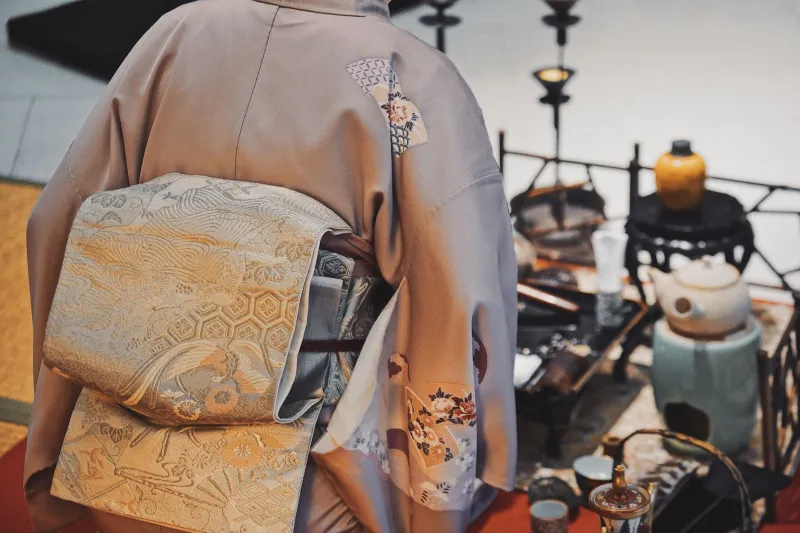
That's not an accident. The entire philosophy of the Japanese tea ceremony — chado, the way of tea — is built around the idea that objects shape experience. The bowl isn't just a vessel. It's an invitation to be present.
Why This Moment, Why Now
It's worth asking why Japanese ceramics are resonating so broadly with American audiences right now. The timing isn't random.
We're living in a cultural moment defined by digital saturation and the fatigue that comes with it. Screens are frictionless. Everything is optimized. And somewhere in that smoothness, a lot of people have lost the feeling of actually touching the world.
Handmade ceramics push back against that. They have friction — literal and metaphorical. They require you to handle them carefully, to notice them, to be slightly aware of their presence. In a strange way, their imperfection demands your attention in the best possible sense.
There's also something meaningful about the scale. A tea bowl is small. It fits in your hands. In a world where problems feel enormous and abstract, there's genuine comfort in an object you can physically hold.
Finding Your Way In
If you're curious about Japanese ceramics but don't know where to start, the good news is that the entry point is lower than you might think.
Japanese American cultural organizations in cities like Los Angeles, Seattle, Chicago, and New York often host craft demonstrations, pottery workshops, and exhibitions that feature both traditional and contemporary ceramic work. These are great places to handle pieces in person — which, with ceramics, really matters.
Craft fairs and local pottery studios are another avenue. Many American ceramicists working in Japanese-influenced traditions sell directly, often at prices far more accessible than gallery work. You don't need to spend a lot to find something that genuinely resonates.
And if you want to go deeper, some studios and community centers offer beginner wheel-throwing or hand-building classes with explicit roots in Japanese technique. Spending even one afternoon with clay teaches you something about this tradition that no amount of reading quite captures.
Start Small. Start With One Bowl.
You don't need to overhaul your kitchen or build a collection. You just need one piece — something that feels right in your hands, something with a little weight and a little character. Put it somewhere you'll use it every day.
See what happens to the morning.
That's the quiet revolution of the tea bowl. It's not happening in galleries or auction houses. It's happening at breakfast tables across America, in the small, unhurried moment when someone picks up something imperfect and finds it beautiful.