Empty Space, Full Life: Why Burned-Out Americans Are Turning to Japan's Ancient Art of the Pause
Empty Space, Full Life: Why Burned-Out Americans Are Turning to Japan's Ancient Art of the Pause
Somewhere between your third back-to-back Zoom call and the moment you realized you'd eaten lunch standing over your kitchen sink again, you may have sensed that something was off. Not broken, exactly. Just... crowded. Like every corner of your life had been stuffed so full of doing that there was no room left for being.
Japan has a word for what's missing. It's ma (間), and it doesn't translate cleanly — which might be part of why it's so powerful.
Roughly, ma refers to the intentional space between things. The pause between musical notes. The emptiness inside a room that gives the furniture meaning. The silence in a conversation that says more than words could. It is not absence. It is, in the Japanese understanding, a presence all its own.
And quietly, steadily, it is finding an audience in America that desperately needs it.
What Ma Actually Means (And What It Doesn't)
It's tempting to translate ma as simply "negative space" and move on. But that framing sells it short. Negative space implies that emptiness is defined only by what surrounds it — a passive gap. Ma is something more intentional. It is the deliberate cultivation of pause as a form of meaning-making.
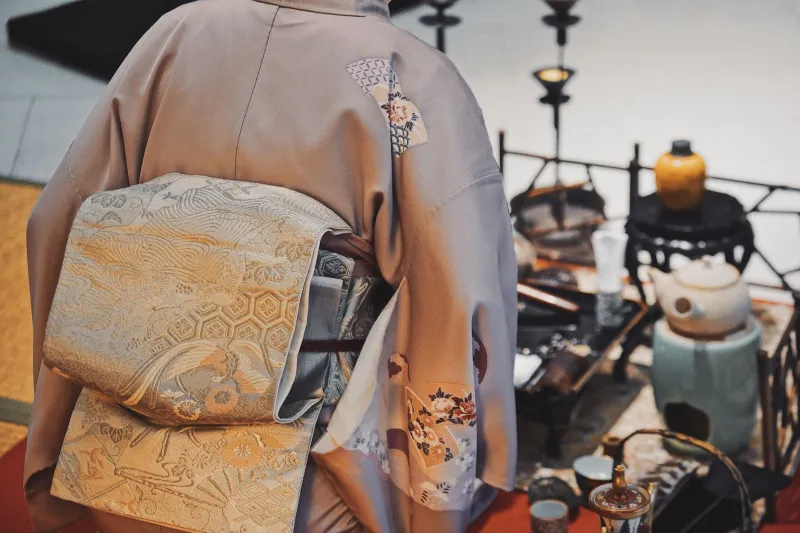
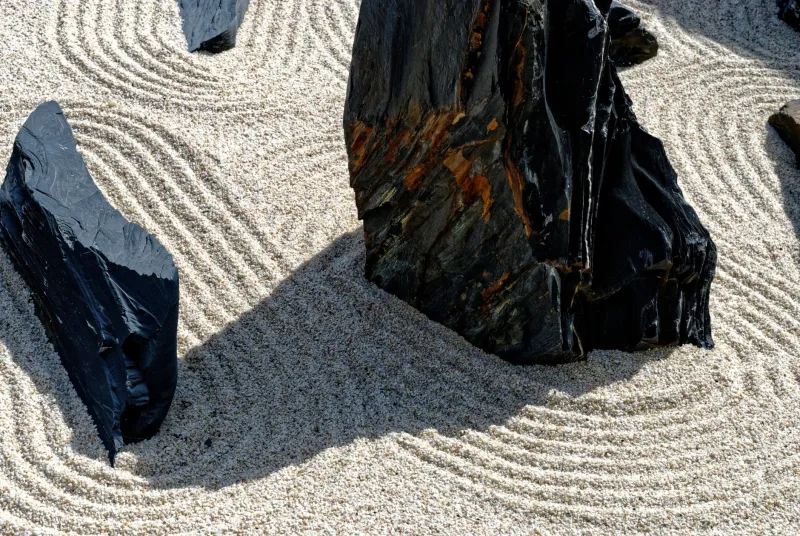
The concept appears across virtually every traditional Japanese art form. In ikebana (flower arranging), the space between stems carries as much visual weight as the blooms themselves. In noh theater, the stillness between movements is considered as expressive as the movement itself. Japanese architecture — from the sliding shoji screens of a traditional home to the raked gravel of a Zen garden — is built around the idea that what you leave out shapes the experience as profoundly as what you put in.
Even in everyday Japanese conversation, ma shows up. A well-timed silence isn't awkward; it's respectful. It signals that you are actually thinking about what was just said before you respond. That kind of pause is not a failure of communication. It is communication.
For Americans raised in a culture that tends to treat silence as something to fill and empty space as something to optimize, this is a genuinely different way of moving through the world.
From Tokyo to the American Living Room
The people bringing ma into American life don't always call it by name. But spend time with interior designers, musicians, therapists, and architects who've been influenced by Japanese aesthetics, and you start to hear the same ideas surface again and again.
Interior designers working in the Japanese-influenced minimalist tradition talk about the importance of "breathing room" — leaving walls bare not because you ran out of art, but because the bare wall is the art. They describe clients who initially feel anxious about empty space, then gradually come to feel calmer, more focused, more at home in rooms that don't demand their constant visual attention.
In music, composers and producers who've studied Japanese traditional forms describe learning to resist the urge to fill every beat. The silence between phrases, they say, is where the listener's emotion lives. Take that away and you've got noise. Leave it in and you've got something that actually lands.
Wellness practitioners — particularly those working with clients experiencing burnout — are starting to incorporate ma principles into how they structure sessions and daily routines. Not meditation, exactly, though it shares some DNA. More like the practice of building in genuine transitions: a few minutes between tasks where you don't immediately pick up your phone, don't queue up the next podcast, don't mentally draft your next email. Just... stop. Let the last thing settle before the next thing begins.
Why Now? Why Here?
It's worth asking why ma is resonating in the US right now, at this particular cultural moment. Part of the answer is obvious: burnout is at epidemic levels. The pandemic reshuffled how Americans work and live, and for many people the reshuffling revealed just how little margin they'd been operating with. The hustle culture that defined the 2010s started to feel less aspirational and more exhausting.
But there's something else going on too. Americans have been consuming Japanese aesthetics — from the Marie Kondo tidying wave to the global spread of Japanese minimalist design — for long enough that some are starting to go deeper. Past the surface-level "declutter your closet" advice and into the underlying philosophy that makes Japanese design so distinctive. And at the heart of a lot of that philosophy is ma.
Japanese American community organizations across the country have noticed the shift. Cultural centers that once focused primarily on preserving traditional arts for Japanese American communities are now fielding inquiries from people with no Japanese heritage at all, looking to understand the ideas behind the aesthetics they've been drawn to. That cross-cultural curiosity, when it's approached with genuine respect and a desire to learn, is something worth celebrating.
Bringing Ma Home: Small Practices, Real Shifts
You don't need to gut your apartment or overhaul your schedule to start experimenting with ma. The philosophy is, at its core, about attention — about noticing what you've been unconsciously filling and asking whether the filling is actually serving you.
A few places people are starting:
In the home. Choose one surface — a shelf, a windowsill, a corner of a desk — and leave it empty. Not as a to-do item waiting to be addressed, but as an intentional choice. Notice how your eye moves differently in a room that has somewhere to rest.
In conversation. Before responding to something someone has said, take one full breath. Not a dramatic pause — just a beat. See what happens to the quality of what you say next, and to how the other person receives it.
In the workday. Build a five-minute gap between major tasks. No scrolling, no multitasking. Just a brief, unstructured pause. It will feel uncomfortable at first. That discomfort is the ma working.
In your calendar. Look for one appointment, commitment, or obligation you've scheduled out of habit rather than genuine desire. Consider what it would mean to leave that slot open — not to fill it later, but to protect it as breathing room.
None of these are dramatic interventions. That's the point. Ma doesn't ask you to blow up your life. It asks you to introduce a little spaciousness into it, and then pay attention to what that spaciousness makes possible.
A Radical Act Disguised as Doing Nothing
There's a reason ma feels almost countercultural in the American context. In a society that measures worth through output, choosing to pause — choosing to leave space empty — is a quiet act of resistance. It says that not every moment needs to be productive. That silence is not wasted time. That the gap between things is not a failure of planning but a feature of a life thoughtfully lived.
Japanese culture has understood this for centuries. Americans are just starting to catch up.
At Kouenkai, we've always believed that Japanese cultural ideas have something genuinely useful to offer — not as exotic imports to be consumed, but as perspectives that can sit alongside our own and quietly expand them. Ma is one of the most elegant examples of that. It doesn't demand that you become someone different. It just asks you to stop, for a moment, and notice what's already there in the space you've been too busy to see.
Maybe that's enough to start.