Grandma's Recipe Box: How Japanese American Families Are Cooking Their Way Back to Who They Are
Grandma's Recipe Box: How Japanese American Families Are Cooking Their Way Back to Who They Are
The recipe card is barely legible. The ink has faded to a soft gray, the paper gone soft at the corners from years of being handled, tucked away, and handled again. But for Amy Nakamura, a third-generation Japanese American in Los Angeles, that little card — her grandmother's handwritten instructions for nishime, a slow-simmered root vegetable dish — is one of the most important documents she owns.
"She made it every New Year," Amy says, smoothing the card on her kitchen counter. "After she passed, nobody knew how to make it. We just stopped having it. And then I realized — we stopped having a piece of her."
Amy's story isn't unique. All across the country, from Little Tokyo to Chicago's North Side to the neighborhoods of Honolulu, a quiet but deeply emotional movement is taking shape in Japanese American kitchens. Sansei and Yonsei home cooks — third and fourth generation — are digging through family archives, interviewing aging relatives before their memories fade, and partnering with community organizations to bring back dishes that were nearly lost forever. The reasons those dishes disappeared in the first place are complicated, painful, and deeply tied to American history.
What Was Lost — and Why
To understand what's being reclaimed, you have to understand what was taken. The forced incarceration of Japanese Americans during World War II didn't just uproot families from their homes and livelihoods. It severed cultural threads that had been carefully woven over generations. Recipes stored in kitchens that were locked up or sold off. Cooking tools left behind. And perhaps most damagingly, a deliberate effort by many Nisei parents — those who had lived through the camps — to shield their children from anything that might mark them as "too Japanese" in an America that had just called them the enemy.
Assimilation wasn't a choice for many families. It was survival. And food, one of the most intimate expressions of culture, was often quietly set aside.
"My dad told me they just stopped speaking Japanese at home after the war," says David Ito, a Sansei living in Chicago. "The food went the same way. My grandmother learned to make casseroles. She learned to make pot roast. The oshiruko and the tsukemono — those just kind of disappeared."
Decades later, David is trying to reverse that erasure, one dish at a time.
The Recipe Hunters
What's remarkable about this movement is how resourceful and determined its participants are. These aren't professional chefs or food historians — they're accountants, teachers, nurses, and designers who have decided, often in their 30s and 40s, that they can't let another generation pass without doing something.
In Los Angeles, the Japanese American National Museum has become an unlikely culinary archive. Community members have donated recipe cards, handwritten cookbooks, and even menus from pre-war Japanese American restaurants in Little Tokyo. Museum staff and volunteers have been quietly digitizing these documents, making them searchable for families trying to piece together their culinary heritage.
"We've had people come in crying," says one museum volunteer who asked to remain anonymous. "They recognize their grandmother's handwriting on a recipe card that was donated by someone else entirely. These families were neighbors before the war. Their recipes ended up in the same archive."
In the Bay Area, a grassroots group called Obaachan's Kitchen — named for the Japanese word for grandmother — holds monthly gatherings where members bring dishes and stories. The format is simple: cook something your family used to make, or something you're trying to reconstruct, and talk about where it comes from. What started as a small meetup in a community center has grown to over two hundred members, with a shared digital recipe database that anyone in the group can contribute to.
"We had one woman who only had a list of ingredients — no measurements, no method," says group co-founder Reiko Tanaka. "We spent three sessions just trying to figure out her mother's kabocha dish. It became this whole community project. And when we finally got it right, she cried. We all cried."
Honolulu's Living Archive
In Hawaii, where Japanese Americans make up a significant portion of the population and the cultural preservation stakes feel especially high, the work takes on a different texture. The Japanese Cultural Center of Hawai'i has long been a hub for this kind of intergenerational exchange, but in recent years, younger members have pushed for more food-specific programming.
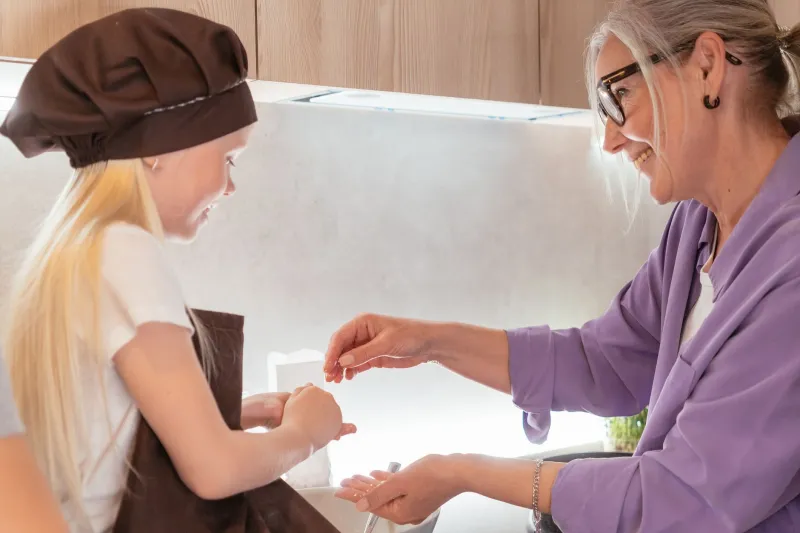
The Center's Tastes of Memory series invites elderly community members to cook alongside younger participants, narrating as they go. The sessions are recorded and archived. It's oral history, but edible.
"My tutu — my grandmother — she can't always remember what year things happened," says Kenji Yamamoto, a Yonsei participant in the program. "But she remembers every step of making mochi. Her hands remember. So we film her hands."
The dishes that emerge from these sessions aren't always purely Japanese. Many reflect the layered, hybrid identity of Japanese Americans — spam musubi alongside ozoni, teriyaki made with local Hawaiian fish, andagi doughnuts with a Okinawan twist. That hybridity, participants say, is part of the story too.
Why This Matters Beyond the Kitchen
Food preservation is memory preservation. But it's also, for many Japanese Americans, an act of healing — a way of processing a history that the broader American narrative has often minimized or ignored.
"When I cook my grandmother's food, I feel like I'm saying: we were here, we had a culture, and it survived," says Amy Nakamura back in Los Angeles, her pot of nishime now bubbling gently on the stove. "The incarceration tried to erase us. Assimilation tried to smooth us out. But here's this dish. It made it."
There's also something quietly political about the act. In a moment when Japanese American history — including the internment — is being taught less frequently in schools, keeping these recipes alive is a form of civic memory. It's a way of saying: this happened, and we're still here, and we're still cooking.
Community organizations like the Japanese American Citizens League have begun incorporating food history into their educational outreach, recognizing that a dish can teach something a textbook might not. That nishime made from whatever root vegetables were available in a camp mess hall tells a story about resilience that no lecture quite captures.
How You Can Get Involved
If this resonates with you — whether you're Japanese American yourself or simply someone who believes that food cultures deserve to be preserved — there are ways to plug in.
Reach out to your local Japanese American community organization or cultural center. Many are actively looking for volunteers to help with archiving, cooking events, or intergenerational programming. If you have elderly relatives, consider sitting down with them soon — not just to record recipes, but to ask about the stories behind them. Who taught them? What occasions called for this dish? What did the kitchen smell like?
And if you find yourself with a faded recipe card and no idea where to start, know that you're not alone. Somewhere, in a kitchen not far from yours, someone else is squinting at their grandmother's handwriting and trying to figure out what "a handful" of flour actually means.
The revolution is quiet. It smells like dashi and soy sauce and something sweet simmering low on the stove. And it's happening one recipe at a time.