More Than a Black Belt: How the American Dojo Became a Place to Actually Belong
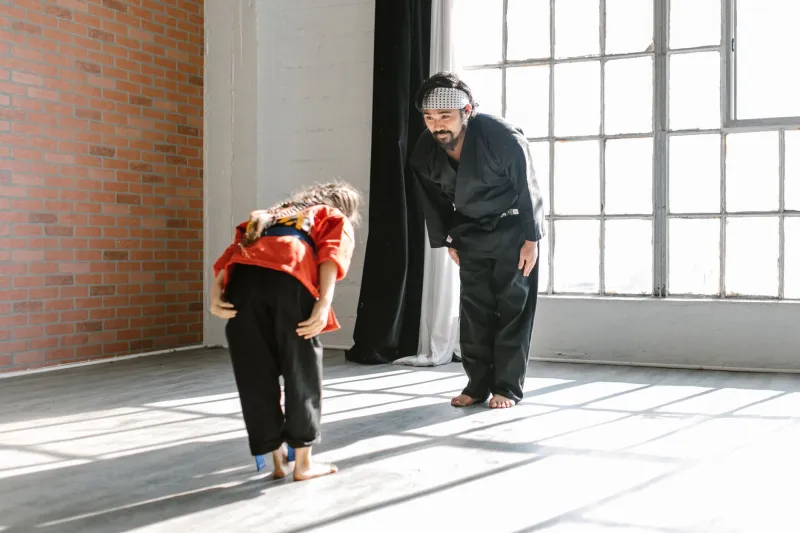
There's a moment that happens in almost every dojo, usually sometime around the third or fourth week. A new student — maybe a nervous eight-year-old, maybe a middle-aged accountant who signed up on a whim — stops thinking about their feet and starts noticing the room. The senior students helping beginners without being asked. The sensei who remembers everyone's name. The quiet ritual of bowing before you step onto the mat. Something clicks, and it isn't a technique. It's the feeling of being somewhere that has structure, intention, and actual warmth.
Across the United States, Japanese martial arts dojos are doing something that neighborhood associations and community centers have been struggling to pull off for decades. They're building real, lasting human connection — one practice session at a time.
The Word on the Mat
The word dojo literally translates to "place of the way" — a space not just for physical training, but for the cultivation of character. That framing, borrowed directly from Japanese philosophy, turns out to matter enormously in practice. When you walk into a dojo, you're not just a customer. You're a student in a lineage. You have responsibilities to the people who came before you and to the people who will come after.
That might sound heavy, but longtime practitioners say it's actually the opposite of pressure — it's relief. In a culture where most social interactions are transactional and fleeting, the dojo offers something rarer: a place where showing up consistently, treating others with respect, and working hard actually means something. Those values aren't posted on a sign. They're built into every bow, every osu, every moment a senior student takes extra time with someone who's struggling.
"People don't stay for the fighting," says one karate sensei who has run a dojo in suburban Ohio for over twenty years. "They stay because they feel seen here. Some of my adult students have told me this is the only place in their week where they actually feel like themselves."
Generations on the Same Floor
One of the things that makes dojo culture genuinely unusual in the American context is its casual intergenerationality. On any given Tuesday evening, you might see a seven-year-old practicing kata alongside a sixty-two-year-old retired teacher, with a college student refereeing their sparring drill. There's no age-segregated class track, no awkward divide between the "kids' program" and the "adult program." Everyone is just a student.
That mix produces something that's increasingly hard to find: real mentorship. Not the formal, LinkedIn-approved kind, but the organic kind — where an older practitioner notices a younger one struggling and steps in, not because it's their job, but because that's what you do on the mat.
For Japanese American communities in particular, dojos have long served as anchors of cultural continuity. Many families have passed down martial arts practice across three or four generations, using the dojo as a living classroom for language, etiquette, and values that might otherwise fade. But the community being built in these spaces today extends well beyond any single ethnic background. Students from all walks of life are finding in Japanese martial arts a framework for living that resonates far beyond the gym floor.
Discipline as a Love Language
Here's the part that surprises a lot of newcomers: the discipline isn't cold. The structure of a traditional dojo — the formal greetings, the hierarchy of belts, the strict etiquette around the training space — can look intimidating from the outside. But practitioners consistently describe it as one of the most caring environments they've ever been part of.
The reason, many say, is that the structure is for the student, not imposed on them. When a sensei corrects your form for the fifteenth time, it's not criticism — it's investment. The Japanese concept of kaizen, or continuous improvement, runs through martial arts training at every level. Nobody is expected to be perfect. Everyone is expected to keep trying. That's a remarkably forgiving philosophy, wrapped in what looks like rigor.
"I grew up thinking discipline meant punishment," recalls one longtime aikido student in Seattle. "Here it means someone cares enough about your growth to be honest with you. That reframing changed how I parent, how I manage people at work, how I think about my own mistakes."
The Dojo After the Pandemic
Like so many community institutions, dojos took a serious hit during the COVID years. Mats went empty. Zoom classes tried their best and fell short of the real thing. But the aftermath has been telling. When dojos reopened, students came back — and in many cases, new students arrived who had spent two years realizing how badly they needed exactly what a dojo provides.
Enrollment in Japanese martial arts programs has climbed steadily in recent years, and dojo owners report that the conversation around why people are signing up has shifted. It's less about fitness goals or self-defense and more about something harder to name. People want a practice. They want a community. They want a reason to show up somewhere week after week that isn't work, and that gives them something back.
Some dojos have leaned into this explicitly, hosting community events, cultural workshops, and open houses that bring in neighbors who might never have considered martial arts. A judo dojo in Chicago recently partnered with a local Japanese American cultural organization to host a joint summer festival. A karate school in Austin runs a monthly "family mat day" where parents and kids practice together. The dojo is becoming a gathering point in the neighborhood, not just a training facility.
Finding Your Dojo
If any of this sounds like something you've been looking for — the structure, the community, the sense of being part of something with real roots — the good news is that dojos are everywhere. Most offer trial classes, and the culture of genuine welcome means you're unlikely to feel out of place for long.
A few things worth knowing before you walk in: dress simply, arrive a little early, and watch how people treat each other when they think no one is looking. In a good dojo, they treat each other well all the time. You'll know it when you feel it — that particular combination of high standards and genuine warmth that's hard to manufacture and impossible to fake.
The bow at the door isn't just tradition. It's an invitation. You're entering a space where people take each other seriously, take their practice seriously, and still manage to laugh a lot. That turns out to be a pretty rare thing in American life.
Maybe that's why so many people, once they find their dojo, never really leave.