You Brought Something Back: How Japan's Omiyage Tradition Is Making American Gift-Giving Actually Mean Something
You Brought Something Back: How Japan's Omiyage Tradition Is Making American Gift-Giving Actually Mean Something
Sarah Kowalski used to be the person who grabbed a magnet at the airport gift shop on her way to the gate. Not because she didn't care about the people waiting for her at home — she did. It just never occurred to her that the act of bringing something back could be, well, intentional.
That changed after a work trip to Kyoto a few years ago, when a Japanese colleague handed her a carefully wrapped box of regional wagashi — delicate sweets made only in that part of the country — with a small, quiet bow. "She explained that you don't come back from somewhere without bringing a piece of it with you," Sarah recalls. "I'd never thought about a gift as being about the place before."
She came home and handed her coworkers a box of Pocky she'd grabbed in the duty-free section. She hasn't done that since.
What Omiyage Actually Is (And Isn't)
The word omiyage (お土産) is often translated as "souvenir," but that translation loses most of what makes the practice meaningful. A souvenir is something you buy for yourself. Omiyage is something you bring back for others — specifically, for the people in your immediate circle who held things together while you were away, or who simply matter to you.
Traditionally, this means coworkers, neighbors, close friends, and family. The gift is almost always edible, locally made, and packaged beautifully — because presentation is part of the message. You're not just saying I thought of you. You're saying I was somewhere specific, and I wanted to bring that place back to you.
The custom is so deeply embedded in Japanese culture that most tourist destinations across Japan stock entire shops dedicated to omiyage — regional sweets, pickled vegetables, specialty crackers, carefully boxed teas. These aren't afterthoughts. They're central to what it means to travel.
Why Americans Are Starting to Pay Attention
Gift-giving in America tends to cluster around big moments — birthdays, holidays, weddings. The everyday, low-stakes gesture of bringing something back from a weekend away for your book club or your next-door neighbor? That's not really in the cultural script.
But something is shifting. As more Americans travel to Japan — or encounter the tradition through Japanese American communities, cultural organizations, or even social media — omiyage is quietly making its way into everyday life.
Marcus Webb, a high school teacher in Portland, Oregon, started practicing omiyage after attending a cultural workshop hosted by a local Japanese American community group. "They talked about how the gift isn't really about the object," he says. "It's about acknowledging that you went somewhere, you had an experience, and the people in your life are part of that story even when they weren't there."
Now, every time he travels — whether it's a weekend in the Columbia River Gorge or a longer trip out of state — he comes back with something local and thoughtful for his colleagues. Honey from a farm he passed. A bag of coffee from a roaster he liked. Jam from a roadside stand. "My coworkers started joking about it," he laughs. "But then they started asking about the trips. It became this whole conversation."
That's the part Americans seem to find surprising: omiyage isn't just about the gift. It's about the connection the gift opens up.
The Mindfulness Nobody Saw Coming
One of the quieter effects of adopting omiyage is what it does to the traveler. When you know you're going to bring something back for specific people, you start paying attention differently. You notice the regional specialty at the farmers market. You ask the shop owner what's made locally. You slow down enough to actually see where you are.
Jennifer Tran, who lives in the Bay Area and travels frequently for work, describes it as a kind of built-in mindfulness practice. "I used to get to a new city and just go from meeting to meeting," she says. "Now I carve out even just thirty minutes to find something worth bringing back. It completely changes how I experience a place."
For Jennifer, the people she brings gifts to have also become more curious about her travels. "My neighbor asked me once what the lavender honey I brought her tasted like compared to regular honey. And then we ended up talking for an hour about where I'd been and what the town was like. That conversation never would have happened if I'd just come home empty-handed."
What Japanese American Communities Have Known All Along
For Japanese American families, omiyage has never gone anywhere. It's been a quiet thread running through generations — a practice that survived relocation, assimilation pressure, and the long work of rebuilding community after World War II.
At cultural events and gatherings hosted by Japanese American organizations around the country, you'll still see it in action: someone arriving with a box of mochi from a specific bakery, a tin of tea from a shop that's been in the family for years. The gift is small. The meaning is not.
"It's one of those traditions that doesn't need to be explained within the community," says David Nakamura, who volunteers with a Japanese cultural center in Los Angeles. "You just do it. And when people outside the community start doing it too, it's actually really moving. It means something is getting through."
How to Start — Without Overthinking It
If you're curious about folding omiyage into your own travel habits, the good news is that it doesn't require a trip to Japan. The spirit of the practice translates anywhere.
A few loose principles to get started:
Think local, think specific. The whole point is that this gift could only come from this place. Skip the chain-store candy and look for something made in the region — a local preserve, a regional snack, something a shop owner is proud of.
Keep it modest. Omiyage isn't about impressing anyone. A small, thoughtful item is always better than something expensive and generic.
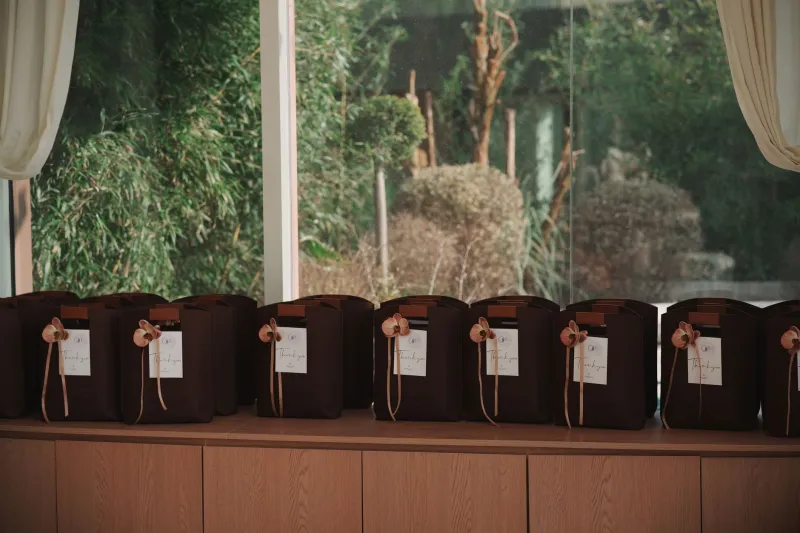
Wrap it with care. Presentation matters in Japanese gift-giving culture. You don't need to go overboard, but a little tissue paper or a small bag signals that you put thought into it.
Give it to the right people. Think about who held things down while you were gone, or who would genuinely enjoy a small window into where you've been. Coworkers, neighbors, close friends — these are the traditional recipients for good reason.
Don't explain too much. Just hand it over. The gesture speaks for itself.
Small Things, Big Meaning
There's a reason omiyage has persisted for centuries in Japanese culture: it works. Not because gifts are magic, but because the act of thinking about someone while you're somewhere else — and then doing something about it — is one of the simplest ways to say you matter to me.
In a culture where gift-giving can feel transactional or obligatory, that simplicity is refreshing. A small jar of local honey. A sleeve of regional crackers. A bag of coffee from a place you loved.
You went somewhere. You came back. And you brought a little piece of it with you, for the people who make coming home worth it.
That's not a souvenir. That's community, wrapped up and tied with a bow.