They Weren't Born Into It — But They're Devoted to It: The Americans Carrying Japanese Craft Traditions Forward
They Weren't Born Into It — But They're Devoted to It: The Americans Carrying Japanese Craft Traditions Forward
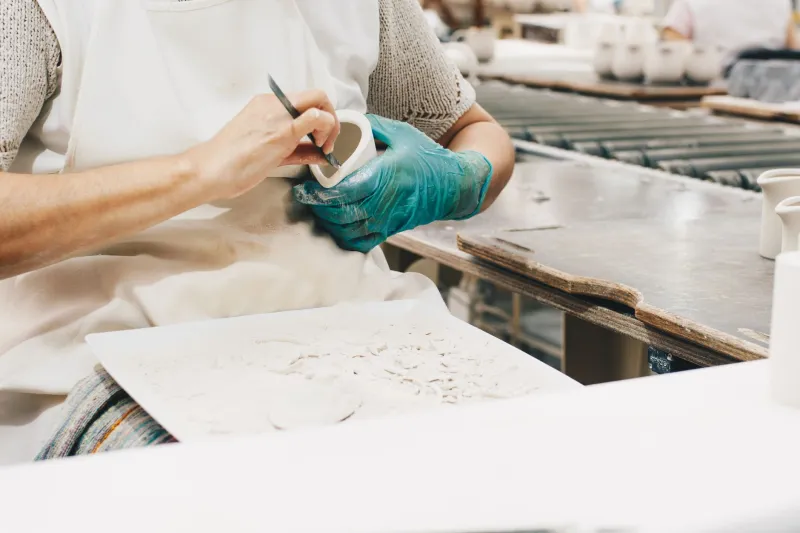
Somewhere in a converted garage studio in Portland, Oregon, a woman in her late fifties is applying the twelfth layer of urushi lacquer to a wooden bowl she has been working on for four months. Each coat must cure in a humidity-controlled environment before the next can go on. The process cannot be rushed. She learned this — really learned it, in her bones — from a lacquerware master in Wajima, Japan, with whom she studied for nearly three years.
She is not Japanese. She grew up in rural Ohio. And she may be one of the most technically accomplished urushi practitioners currently working in the United States.
Her story is not as rare as you might think.
A Different Kind of Cultural Inheritance
When we talk about preserving traditional crafts, the conversation usually centers on the communities from which those crafts emerged — and rightly so. The knowledge embedded in urushi lacquerwork, tsutsugaki textile dyeing, or kintsugi pottery repair represents centuries of accumulated technique, aesthetic philosophy, and cultural meaning. It is not casual knowledge. It is not easily transferred.
But living traditions, by their nature, travel. And in the case of several Japanese craft forms, they have traveled — through dedicated mentorship, cultural exchange programs, and the kind of obsessive personal devotion that doesn't much care about borders — into the hands of Americans who have made them a life's work.
What's striking about these practitioners is not just their skill. It's the depth of the relationships that made that skill possible, and the serious, sometimes uncomfortable questions those relationships raise about stewardship, authenticity, and what it actually means to carry something forward.
The Lacquer Path: Patience as a Practice
Urushi — the sap-based lacquer harvested from the Toxicodendron vernicifluum tree — has been used in Japan for over ten thousand years. Working with it requires not just technical training but a particular disposition: an acceptance of slowness, of unpredictability, of the material's own demands. Urushi causes severe allergic reactions in most people upon first contact. The learning curve is, in the most literal sense, painful.
For American practitioners who have pursued it seriously, the entry point has almost always been a Japanese master willing to take on an unlikely student. The relationship between craft master and apprentice in Japan carries its own cultural weight — it is not a transaction but a commitment, on both sides.
"My teacher told me the first year was just about showing up," recalls one American urushi practitioner based in the San Francisco Bay Area, who was introduced to the craft through a cultural exchange residency in her thirties. "Not about learning technique. Just about demonstrating that I was serious. That I would come back."
She came back for seven years of study, spread across multiple trips to Japan and extended correspondence in between. Now, she teaches small workshops through a Japanese American arts organization in the East Bay, drawing students from wildly different backgrounds — and being deliberate about how she frames what she's passing on.
"I'm very clear with my students that I'm not the origin of this," she says. "I'm a link in a chain. My job is to transmit what was given to me as faithfully as I can, and to make sure the chain doesn't end with me."
Kintsugi and the Meaning of Repair
Of all the traditional Japanese craft forms to find an audience in the contemporary US, kintsugi — the art of repairing broken pottery with lacquer mixed with powdered gold, silver, or platinum — has arguably achieved the widest cultural footprint. Its central metaphor, that breakage is part of an object's history rather than a flaw to be hidden, has resonated powerfully in American wellness and design culture.
But there's a gap between kintsugi as metaphor and kintsugi as craft. The internet is full of weekend workshop kits. Actual kintsugi, practiced with authentic urushi and real precious metals, following traditional methods, is something else entirely.
A ceramics instructor in Chicago who began studying kintsugi after encountering it through a Japanese American cultural center has spent the better part of a decade trying to honor that distinction. She is now one of a small number of people in the Midwest offering serious instruction in the traditional method — and she's candid about the complexity of her position.
"There's a version of this that gets flattened into a self-help concept," she says. "And I understand the appeal of that. But when I'm teaching the actual craft, I want people to understand the full context — the philosophical tradition of wabi-sabi, the specific history of the materials, the fact that this knowledge comes from somewhere and from someone."
Her classes regularly include Japanese American students who have come to the craft as a way of reconnecting with heritage, alongside people with no Japanese background at all. The dynamic, she says, is always interesting.
Tsutsugaki: The Art That Almost Wasn't Transmitted
Of the craft traditions finding new American practitioners, tsutsugaki — a form of textile dyeing in which rice-paste resist is applied through a cone to create intricate designs on fabric — is perhaps the least widely known and the most at risk of disappearing entirely.
In Japan, the number of active tsutsugaki masters has dwindled significantly over the past several decades. The craft is labor-intensive, the materials require specialized knowledge, and the market for traditional textiles has contracted.
Which makes the story of a textile artist in Albuquerque, New Mexico — who encountered tsutsugaki through a chance meeting with an elderly Japanese master at a textile exhibition and subsequently spent years studying under him — all the more remarkable.
She describes her teacher, who has since passed away, with a reverence that goes well beyond professional admiration. "He didn't have to teach me. He had every reason not to. I was a stranger, I didn't speak Japanese, and I had no obvious connection to the tradition." She pauses. "I think he was worried it would die. I think he decided that mattered more than where I was from."
She now maintains an archive of his patterns and techniques, exhibits her work through Japanese American cultural organizations, and is actively seeking the next person to pass the knowledge to.
What Cultural Stewardship Actually Looks Like
The question of who has the right — or the responsibility — to carry forward a cultural tradition is not a simple one, and the practitioners profiled here don't pretend otherwise. They are, almost universally, thoughtful about attribution, about context, about the difference between appreciation and appropriation.
What they share is a conviction that living traditions need living practitioners, and that the alternative to imperfect cross-cultural transmission is not preservation — it's loss.
For Japanese American communities across the US, the presence of these devoted non-Japanese practitioners is, by and large, welcomed. Not uncritically, and not without ongoing conversation. But the consensus, among the cultural organizations and individuals who have worked alongside them, tends toward a pragmatic generosity: if the craft survives, something essential survives with it.
The bowl in the Portland garage is still curing. Layer thirteen goes on next week.