The Philosophy of the Park: How Japan's Kōen Culture Is Quietly Reshaping the Way Americans Gather
The Philosophy of the Park: How Japan's Kōen Culture Is Quietly Reshaping the Way Americans Gather
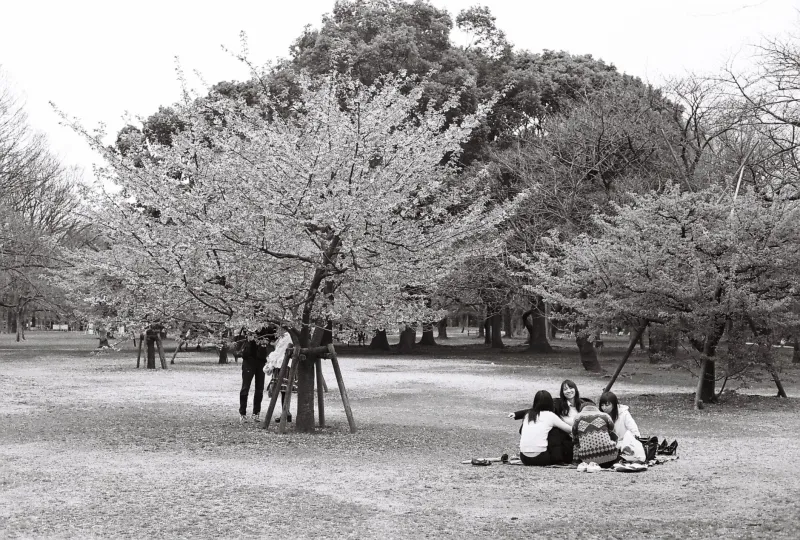
There's a particular kind of afternoon that happens in Japanese public parks that doesn't have a perfect American equivalent — at least not yet. Office workers spread tarps under cherry trees during hanami season, eating convenience store onigiri alongside colleagues in a way that feels both casual and ceremonial. Elderly neighbors play gateball on a quiet corner while toddlers chase pigeons nearby. A group of teenagers sits in a circle, sharing earbuds, not really doing anything in particular. And somehow, all of it feels purposeful.
This is kōen culture. And while most Americans have never heard the term, its philosophy is quietly working its way into how US cities think about public space, community design, and the simple act of being together outside.
What Kōen Actually Means
The word kōen (公園) literally translates to "public garden" or "public park," but that translation undersells it. In Japan, kōen are not passive amenities — they're active community infrastructure. Every neighborhood has one, often anchored by a central open space with clearly defined zones for different kinds of use: play areas for children, exercise equipment for seniors, open lawns for group gatherings, and quiet corners for solitary reflection.
What makes kōen distinct from the typical American park isn't just design — it's social expectation. In Japan, parks are understood as shared living rooms. You bring food. You stay for a while. You don't just pass through. The park is a destination, not a shortcut.
This philosophy is deeply connected to Japanese ideas about ma — the meaningful use of space and intervals — and satoyama, the concept of human communities existing in harmony with natural environments. The park, in this framework, isn't nature set apart from human life. It's nature woven into it.
Hanami and the Ritual of Seasonal Gathering
No discussion of kōen culture is complete without hanami — the centuries-old practice of gathering beneath flowering cherry trees in spring to appreciate their brief, beautiful bloom. Hanami is not a festival in the organized sense. There are no tickets, no stages, no scheduled programming. It's a collective, spontaneous ritual that emerges because the trees bloom and people simply show up.
The genius of hanami is that it creates community without requiring infrastructure. All you need is a tree, a tarp, and the willingness to sit beside strangers. In Japan, hanami gatherings often mix coworkers, families, and friend groups in adjacent clusters, creating a kind of organized spontaneity that feels both intimate and communal at the same time.
This tradition has traveled across the Pacific in meaningful ways. Japanese American communities have practiced hanami in the US for generations, and in cities like San Francisco, Seattle, and Washington D.C., cherry blossom season now draws enormous, diverse crowds who may not know the word hanami but are practicing its spirit anyway. They bring blankets and food. They sit under the trees. They stay.
What American Cities Are Starting to Understand
For much of the 20th century, American urban planning treated parks as buffers — green space that separated residential zones from commercial ones, or simply gave cities a visual break from concrete. Parks were places you drove to, walked through, or used for specific athletic activities. The idea of a park as a social hub, a place where community life actually happened, wasn't always built into the design.
That's been changing. The High Line in New York City, Millennium Park in Chicago, Klyde Warren Park in Dallas — these aren't just green spaces. They're programmed, community-centered gathering places that host events, encourage lingering, and function as civic living rooms. The language urban planners now use — "placemaking," "third spaces," "activated public realm" — describes something that kōen culture has embodied for centuries.
 Photo: Klyde Warren Park, via www.lifewire.com
 Photo: Millennium Park, via masar.aiacademy.info
 Photo: High Line, via www.animals-digital.de
Organizations like the Project for Public Spaces have documented this shift extensively, noting that the most successful public spaces in American cities share something with Japanese parks: they're designed for people to stay, not just pass through. Seating that faces other seating. Food access. Shade. Flexible open space that can host a farmers market one weekend and a cultural performance the next.
The Kouenkai Connection
Here at Kouenkai, the philosophy of kōen is more than an interesting cultural concept — it's the foundation of why we do what we do. The name itself carries that meaning: a place of public gathering, of community, of shared experience. Japanese cultural events across America don't just happen in parks, but they carry the kōen spirit wherever they land. They create temporary shared spaces where strangers become neighbors, where tradition gets passed down through participation rather than instruction.
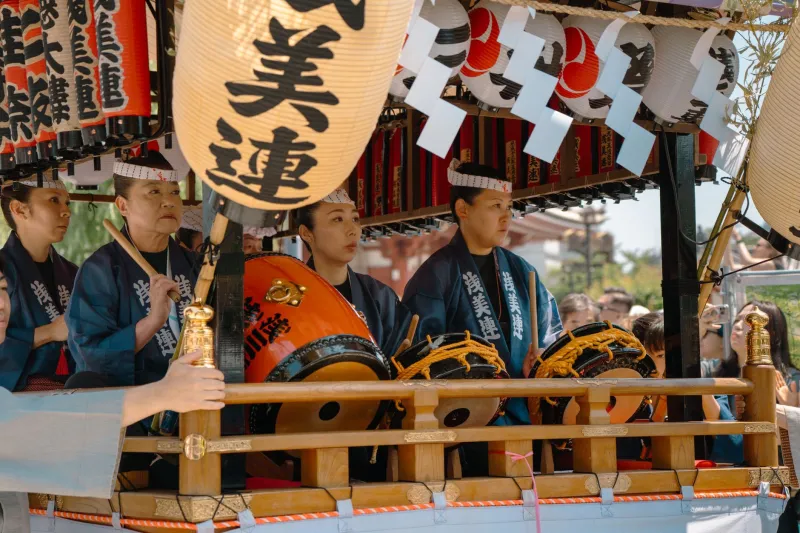
When a taiko group performs at an outdoor plaza in Little Tokyo, or when a Japanese American community center sets up a hanami picnic in a local park, they're not just putting on a show. They're practicing a philosophy of public life that says: this space belongs to all of us, and the best way to honor that is to fill it with culture, food, and the willingness to be present together.
What We Can Borrow — and What We Can't Copy
It would be a mistake to suggest that American cities can simply import kōen culture wholesale. The social norms that make Japanese parks function the way they do — the collective sense of responsibility for shared space, the comfort with proximity to strangers, the patience for unstructured time — these are deeply cultural and can't be replicated through design alone.
But the underlying values are transferable. The belief that public space should serve community life, not just provide scenery. The idea that seasonal rituals create belonging. The understanding that sitting outside together, doing not very much, is actually a form of civic participation.
As American cities continue to grapple with loneliness, disconnection, and the erosion of shared public life, the kōen model offers something genuinely useful: a reminder that community doesn't require an app, a ticket, or a formal event. Sometimes it just requires a good park, a reason to show up, and enough trust to sit beside someone you don't yet know.
The cherry trees, when they bloom, do the rest.