Ready to Do More Than Watch? A Beginner's Guide to Japanese Cultural Classes Near You
Ready to Do More Than Watch? A Beginner's Guide to Japanese Cultural Classes Near You
There's a particular moment that happens to a lot of people at Japanese cultural festivals. You're standing there, watching a taiko ensemble absolutely thunder through a performance, or you're hovering near a tea ceremony demonstration with your paper cup of complimentary green tea, and something clicks. You don't just want to appreciate this — you want to do it.
That feeling? It's completely valid, and the good news is that you don't have to stay on the spectator side. Across the US, Japanese American communities have been quietly running classes, workshops, and programs for decades — many of them open to complete beginners, regardless of background. The trick is knowing where to look and what to look for.
Why Hands-On Participation Actually Matters
There's a concept in Japanese culture called keiko — a word often translated as "practice" or "training," but one that carries a much deeper meaning. It implies returning again and again to a discipline with humility, curiosity, and patience. Whether you're picking up a pair of drumsticks or learning to fold a piece of washi paper just so, you're not just acquiring a skill. You're stepping into a value system that prizes process over performance.
That's what separates a genuine cultural class from a tourist-friendly crash course. And it's the first thing worth understanding before you sign up for anything.
The Big Four: Where Most People Start
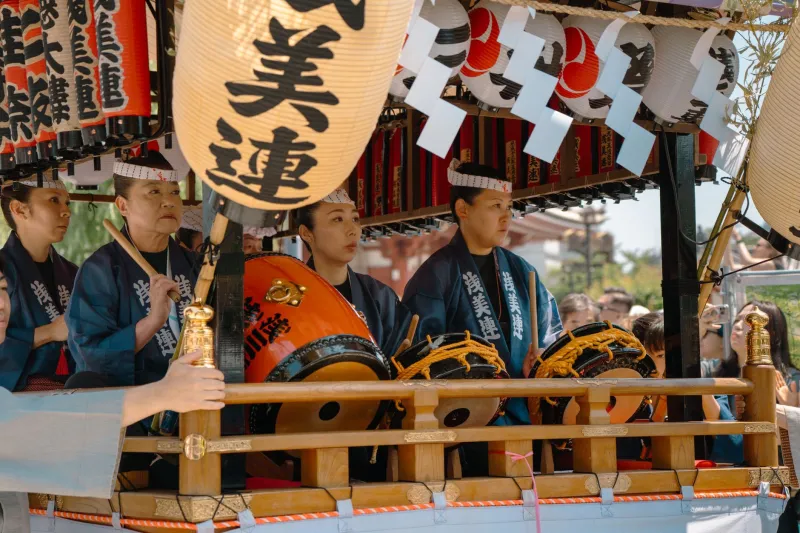
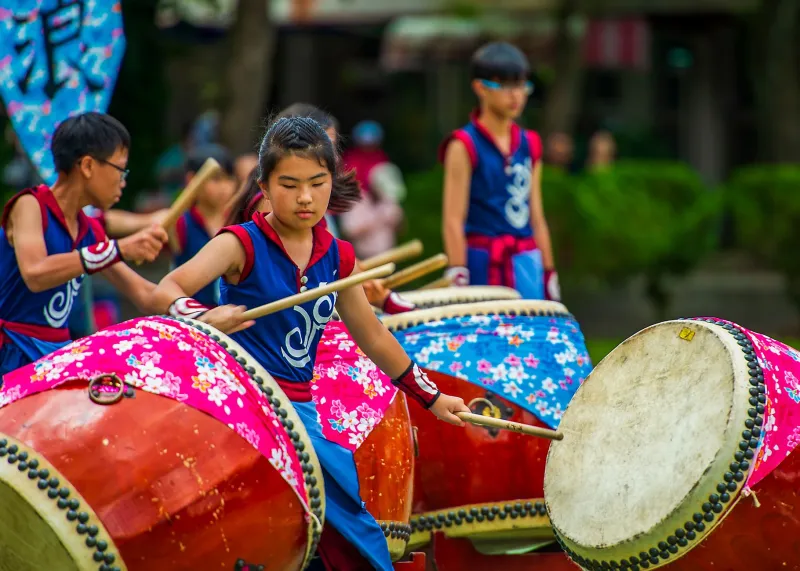
Taiko Drumming Taiko is one of the most popular entry points for non-Japanese Americans curious about Japanese arts — and honestly, it makes sense. It's physical, communal, and immediately gratifying. Groups like San Jose Taiko (California), Kinnara Taiko (Los Angeles), and Denver Taiko have been offering community classes for years, and many of them are rooted in Japanese American cultural centers. Look for groups affiliated with Buddhist temples or Japanese American Citizens League (JACL) chapters — those tend to prioritize cultural integrity over performance spectacle.
 Photo: Buddhist temple, via www.arabsounds.net
 Photo: San Jose Taiko, via static.sinsay.com
Ikebana (Flower Arranging) Ikebana is not your grandmother's floral arrangement. It's a disciplined art form built around negative space, asymmetry, and the relationship between natural elements. Schools like Ikenobo, Sogetsu, and Ohara each have their own philosophy and aesthetic, and many have US chapters that offer in-person workshops. Check with your local Japanese cultural center or Japan Society branch — they often host seasonal ikebana exhibits and connect curious newcomers with certified instructors.
Shodo (Japanese Calligraphy) There's something almost meditative about shodo. The preparation of ink, the weight of the brush, the single decisive stroke — it demands presence in a way that most activities don't. Community-based shodo classes are often offered through Japanese language schools and cultural centers, and they're frequently more affordable than you'd expect. Some instructors even offer beginner workshops specifically designed for English speakers.
Japanese Cooking Okay, yes — everyone wants to make ramen. But community-run Japanese cooking classes go well beyond the trendy stuff. Look for workshops that teach regional home cooking, seasonal ingredients, or traditional techniques like making dashi from scratch or rolling perfect onigiri. Organizations like the Japanese American National Museum in Los Angeles and the Japan America Society of Greater Philadelphia have hosted cooking programs that connect participants not just to recipes, but to the cultural context behind them.
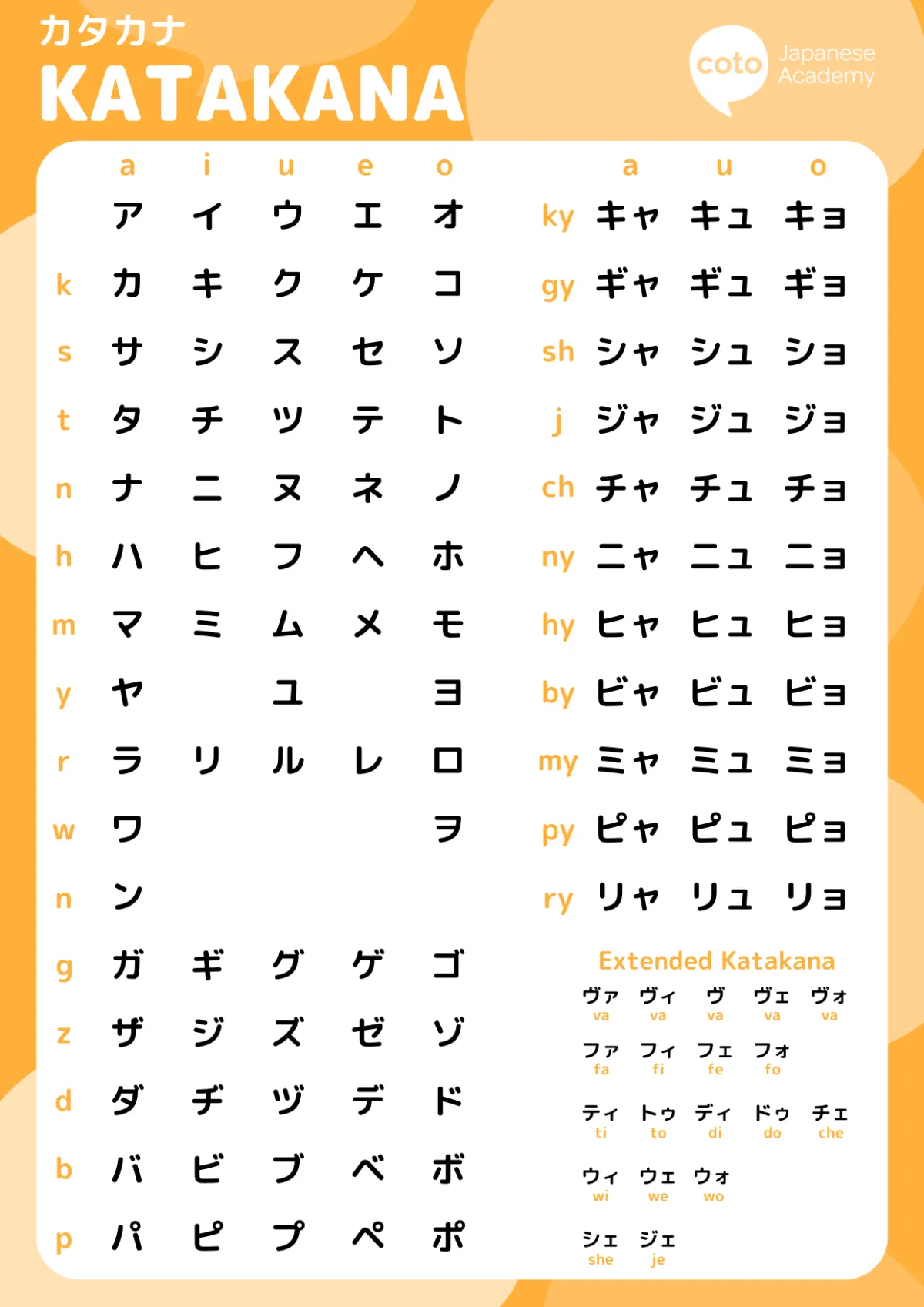 Photo: Japanese American National Museum, via cotoacademy.com
Martial Arts: More Than a Workout
Kendo, judo, aikido, karate — these disciplines have deep roots in Japanese American communities, particularly through dojos that have been operating since before World War II. Finding a dojo with genuine community ties (rather than a franchise-style gym that slaps "Japanese" on the branding) is worth the extra research. Ask about the dojo's history, their connection to national organizations like USA Judo or the All United States Kendo Federation, and whether they participate in local Japanese American cultural events. Those connections matter.
How to Tell the Real Thing from the Tourist Trap
Not every "Japanese experience" workshop is created equal. Here are a few honest markers of a community-connected program versus a commercialized one:
- Who's running it? Classes taught by or affiliated with Japanese or Japanese American instructors with demonstrable training lineage are a good sign. A weekend pop-up at a lifestyle boutique with no cultural affiliation? A little more skeptical.
- Where is it held? Japanese American cultural centers, Buddhist temples, language schools, and JACL chapters are natural homes for authentic programming. These spaces have community accountability built in.
- Is there continuity? Legitimate cultural disciplines aren't one-and-done. If a program offers a single 90-minute session and calls it a day, that's fine for casual exposure — but it's not the same as actually learning something.
- Does it connect you to people? The best programs introduce you to a community, not just a skill set.
Finding Classes in Your City
Start with these resources:
- Your local Japanese American Citizens League chapter — the JACL has chapters in dozens of cities and often maintains cultural programming calendars.
- Japanese American cultural and community centers — cities like Seattle, San Francisco, Chicago, Denver, and New York all have established centers with robust programming.
- Japan Society branches — present in several major US cities, they frequently host workshops across disciplines.
- Local Buddhist temples with Japanese American congregations — many host community arts programs as part of their cultural mission.
- University Japanese student associations — college campuses often host free or low-cost workshops, and they're usually very welcoming to community members.
The Real Reward
Here's what people who've taken the leap consistently say: the class itself is just the beginning. What they didn't expect was the community that came with it — the Saturday morning taiko practice that turned into a decade-long friendship group, the ikebana instructor who became a mentor, the cooking class that led to volunteering at a cultural festival.
Japanese cultural disciplines aren't just activities. They're entry points into living communities that have been preserving and sharing these traditions across generations. All you have to do is show up and be willing to be a beginner.
That, as it turns out, is the most Japanese thing of all.