The Space Between Words: How Japan's Concept of Ma Is Teaching Americans to Stop Filling Every Silence
The Space Between Words: How Japan's Concept of Ma Is Teaching Americans to Stop Filling Every Silence
Somewhere in the middle of a conversation, something interesting happens. Someone finishes a sentence, and before the last syllable has fully landed, someone else jumps in. No breath taken. No beat allowed. Just an immediate rush to fill the air before it empties out. If you've ever sat at an American dinner table, attended a work meeting, or tuned into basically any talk radio show, you know exactly what this sounds like.
Now imagine the opposite. Not awkward silence. Not forgetting what you were going to say. But a deliberate, unhurried pause — a moment held open on purpose, like a door left ajar. That's ma.
What Ma Actually Means
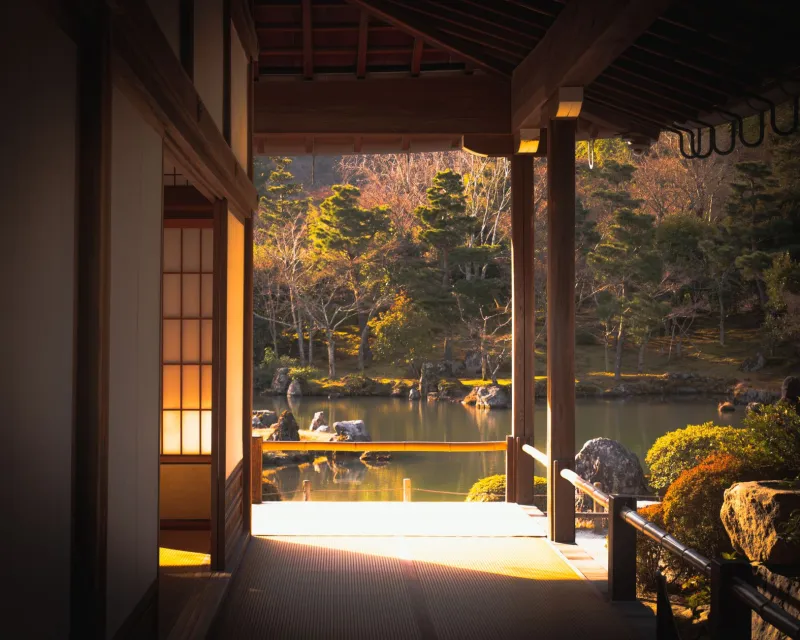
Ma (間) is one of those Japanese concepts that resists a clean translation, which is maybe part of why it's so interesting. At its most literal, it refers to a gap, an interval, a space between things. But in practice, it shows up everywhere in Japanese culture — in architecture, in music, in theater, in conversation, even in the visual arts. It's the breath between notes in a shakuhachi flute performance. It's the empty corner of a room that makes the rest of the space feel intentional. It's the pause a speaker takes before answering a question, not because they don't know what to say, but because they're choosing to honor what was just said before moving on.
For many Japanese Americans who grew up navigating both cultural worlds, ma isn't something they had to learn — it was just there, woven into how their families communicated. "My grandmother would pause before she responded to almost anything," says one community member who helps facilitate Japanese cultural workshops in the Pacific Northwest. "As a kid, I thought she was hard of hearing. Later I realized she was just actually thinking about what I said."
A Culture That Hates Quiet
America, broadly speaking, has a complicated relationship with silence. We tend to experience it as absence — something missing, something that needs to be fixed. Silence in a conversation can feel like disapproval, discomfort, or disengagement. We fill elevators with music, waiting rooms with screens, and phone calls with "uh-huh, yeah, totally" just to signal that we're still present. The loudest person in the room often gets mistaken for the most confident one.
This isn't entirely irrational. American communication culture, particularly in professional settings, tends to reward quick thinking and verbal fluency. But a growing number of people — therapists, educators, musicians, and just regular folks burned out by the relentlessness of always-on conversation — are starting to wonder if something is being lost in all that noise.
Where Ma Is Showing Up in American Life
It's showing up in therapy offices, for one. Practitioners who work with Japanese American clients or who have studied cross-cultural communication have started incorporating the idea of intentional silence as a therapeutic tool. Rather than rushing to reflect back what a patient said, some therapists are experimenting with sitting in the pause — letting the silence do some of the work. The results, many report, are striking. Clients say more. They go deeper. The silence creates room for something that the next sentence would have otherwise crowded out.
In music, the connection is even more direct. Jazz musicians have long understood that the notes you don't play matter as much as the ones you do — Miles Davis built an entire career on that idea. But Japanese American musicians and music educators are now explicitly drawing the line between that tradition and ma, helping students understand silence not as a gap to be filled but as an active musical choice. At cultural events and workshops hosted by Japanese American community organizations, this conversation is happening more and more: what does it mean to leave space, and why does it feel so hard?
And at dinner tables — yes, actual dinner tables — some families are trying something radical. Putting the phones away isn't new advice. But intentionally pausing before responding to what someone says? Letting a story land before launching into your own? That's a different kind of practice, and it's one that a few Japanese cultural educators are actively teaching in community settings.
Why Japanese American Communities Are the Bridge
For Japanese Americans who grew up code-switching between two very different communication styles, ma is personal. It's not an abstract philosophy — it's the way their grandparents listened, the way their parents handled conflict, the texture of Sunday afternoons at a grandparent's house where not everything needed to be said out loud.
Many Japanese American cultural organizations across the country are doing the quiet work of translating these ideas for broader audiences — not to lecture, but to share. Through tea ceremony demonstrations, ikebana workshops, theater performances rooted in Noh or Butoh traditions, and even community conversation circles, they're creating spaces where Americans can experience ma rather than just read about it. You can explain the concept in a paragraph. But sitting in a room where someone actually holds the pause — that's something else entirely.
"People always say they want better conversations," notes one organizer of Japanese cultural programming in the Bay Area. "But better conversations usually start with better listening, and better listening usually starts with being okay with a little silence."
Trying It Yourself
You don't need a workshop to start experimenting with ma, though attending one certainly helps. The next time someone tells you something — really tells you something — try waiting a full breath before you respond. Not because you don't have anything to say, but because you're letting what they said exist in the air for a moment before you move on. See what happens. See what they add. See what you notice that you might have missed if you'd rushed in.
It's a small thing. It might feel uncomfortable the first few times. But that discomfort is kind of the point — it's the sound of a habit loosening its grip.
Ma isn't about being quiet for the sake of it. It's about understanding that space is not emptiness. It's potential. It's respect. It's the room you make for someone else's words to actually matter.
In a noisy world, that might be the most radical thing you can offer.