Made Once, Meant to Last: What Japanese Craftsmanship Is Quietly Saying About the Stuff We Keep Throwing Away
Here's a number worth sitting with: the average American throws away about 4.5 pounds of trash per day. A significant portion of that is stuff that was bought cheap, used briefly, and discarded without much thought. A phone case. A set of kitchen knives. A pair of shoes that looked fine in the store and fell apart in three months. We've normalized the cycle so thoroughly that most of us don't even notice it anymore.
But something is starting to shift. And part of what's driving that shift is coming from an unexpected place — the centuries-old craft traditions of Japan.
A Different Relationship With Objects
In Japan, there's a cultural tendency to treat well-made objects with a kind of reverence that can feel foreign to American eyes. A chef's knife passed down through generations. A hand-woven textile that takes weeks to produce. Woodworking tools with handles worn smooth by decades of use. These aren't just functional items — they carry meaning. They're evidence of care, of skill, of someone's full attention.
This orientation toward objects isn't accidental. It's baked into traditions like monozukuri — the philosophy of making things with deep intention and craftsmanship — and reinforced by centuries of apprenticeship culture where mastery is measured in decades, not months. The result is a material culture where the goal isn't to make something that sells. It's to make something that endures.
Americans who've started engaging seriously with Japanese cultural practices — through community events, cultural centers, or simply through buying Japanese-made goods — often describe a kind of awakening when they first hold something made this way. There's a weight to it. A solidity. It feels like it was made by someone who assumed you'd still be using it in twenty years.
The Planned Obsolescence Problem
The contrast with mainstream American consumer culture is hard to ignore. Planned obsolescence — the deliberate design of products to become outdated or nonfunctional within a predictable timeframe — has been a feature of American manufacturing since at least the 1920s. The logic is simple: if things last forever, people stop buying new ones.
The result is a market flooded with products engineered to fail. Appliances that break just after the warranty expires. Fast fashion that loses its shape after a handful of washes. Electronics that become "unsupported" within a few years. We've built an entire economy around the assumption that things are temporary — and we've mostly accepted it.
But acceptance isn't the same as satisfaction. And a growing number of American consumers, craftspeople, and makers are starting to push back.
What the Switch Reveals
Talk to Americans who've made deliberate shifts toward Japanese-made tools or goods and you start hearing a consistent theme: the initial sticker shock is real, and then it stops mattering.
A woodworker in Portland, Oregon describes buying his first Japanese hand plane — a kanna — after years of working with cheaper Western alternatives. "I spent three times what I would have on a hardware store version," he says. "That was five years ago. I've spent nothing on it since. It's sharper now than when I bought it because I learned how to maintain it properly." He pauses. "That's a different relationship with a tool."
A home cook in Nashville made a similar switch with kitchen knives after attending a Japanese cultural event where a local chef demonstrated traditional blade care. "I'd been buying the same mid-range knife set every couple of years because they'd dull and I didn't know how to fix them," she says. "Now I have one knife. I know how to sharpen it. It's part of my routine."
These aren't isolated stories. Across American cities with active Japanese cultural communities, there's a quiet but growing conversation about what it means to own fewer things that are genuinely worth owning.
Craft as Resistance
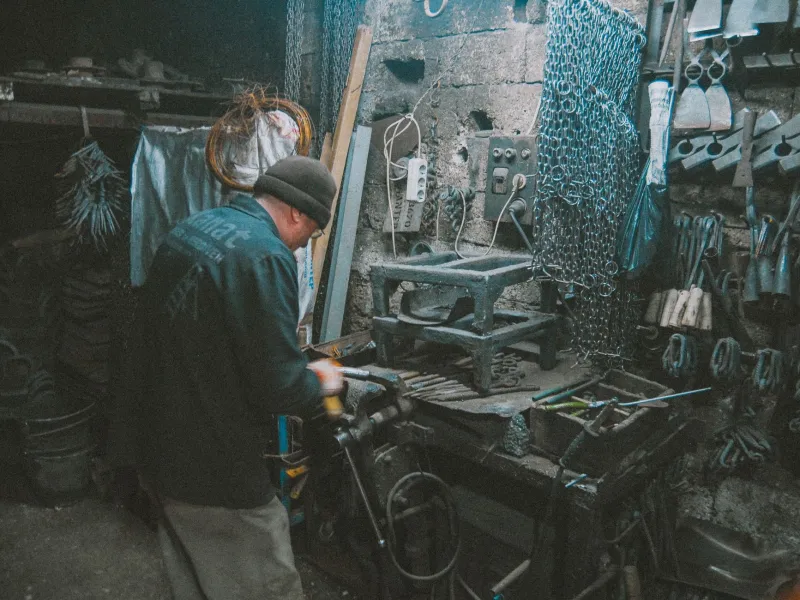
For some, the interest in Japanese craftsmanship has become explicitly political — a form of pushback against consumption culture. American makers who've studied Japanese techniques in disciplines like blacksmithing, ceramics, textile weaving, and joinery often describe the work as a kind of protest. Making something by hand, making it well, and making it to last is a direct rebuke to the throwaway model.
At craft workshops hosted by Japanese American cultural organizations around the country, this conversation comes up regularly. Participants aren't just learning techniques — they're interrogating assumptions. Why do we expect things to be cheap? Why do we treat durability as a luxury feature? What does it say about us that we've decided our objects don't need to outlast us?
These questions don't have easy answers. But they're worth asking.
The Environmental Dimension
There's an environmental argument here that's hard to dismiss. The production of cheap goods — particularly fast fashion and disposable electronics — generates enormous amounts of waste and pollution. When something is made to last, and actually does, the environmental math changes significantly. Fewer raw materials consumed. Less manufacturing waste. Fewer items ending up in landfills.
Japanese craft traditions have long operated with this logic, even if it wasn't always framed in environmental terms. The concept of mottainai — a feeling of regret over waste, and a commitment to using things fully — runs through Japanese material culture in ways that naturally extend product lifecycles. Americans engaging with Japanese cultural communities are increasingly encountering this idea and finding it resonant.
The Investment We Keep Avoiding
The honest obstacle here is money. Genuinely well-made things cost more upfront, and for many Americans that's a real barrier, not just a preference. There's no point in romanticizing artisanal craftsmanship without acknowledging that access to it is uneven.
But for those who do have the option to choose differently, the question Japanese craftsmanship keeps asking is a simple one: what are you actually willing to invest in? Not just financially, but in terms of attention, care, and relationship with the things you use every day.
That's not a question American consumer culture tends to encourage. But it's one that more Americans are starting to sit with — and the answers are changing what ends up in their hands, and what ends up in the trash.