Same Thing, Every Morning: Why Americans Are Borrowing Japanese Daily Rituals to Quiet the Chaos in Their Heads
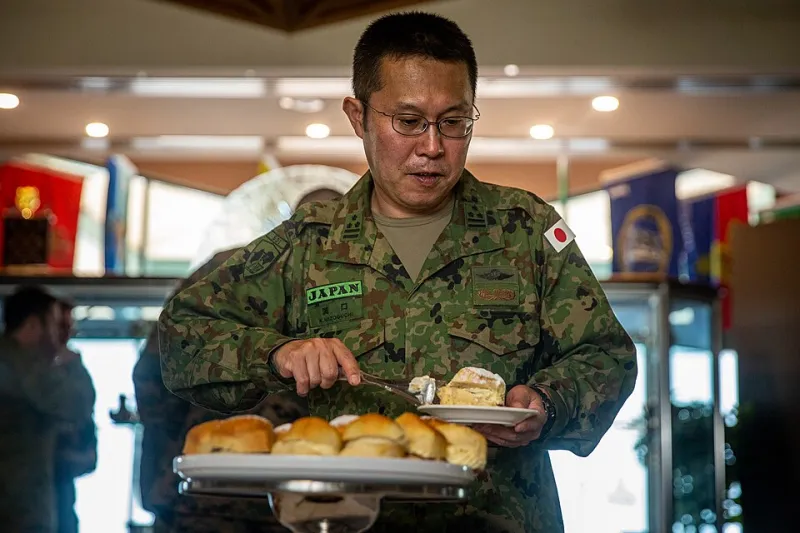
Photo: U.S. Marine Corps photo by Cpl. Colton Garrett, Public domain, via Wikimedia Commons
By 9 a.m. on a typical weekday, the average American adult has already made dozens of decisions. What to wear. What to eat. Whether to check email before or after coffee. Whether to exercise now or later or maybe tomorrow. What to say in response to that text that came in at 7. These aren't big decisions, but they accumulate fast — and the cognitive cost of all that small-scale choosing is something researchers have been documenting for years under the label of decision fatigue.
The antidote, it turns out, might be something the Japanese have been practicing for centuries.
The Freedom Inside a Fixed Routine
It sounds paradoxical: that limiting your choices could feel liberating. But that's exactly what Americans who have adopted Japanese daily rituals keep describing. The structure doesn't feel like a cage. It feels like relief.
Consider the Japanese practice of asagohan — not just breakfast, but the whole morning ritual surrounding it. In traditional Japanese households, mornings follow a sequence: a specific kind of meal (rice, miso soup, pickled vegetables, a protein), prepared and eaten with a degree of care and consistency that most Americans would associate with a special occasion rather than a Tuesday. The meal doesn't change much day to day. That's the point. You don't have to decide what to eat. You eat what you eat. Your mind is free for other things.
Or take the practice of sōji — the daily cleaning ritual that's part of school and workplace culture in Japan, where everyone participates in maintaining the shared space. It happens at the same time, in the same way, every day. Again: no decision required. It's just what you do.
"I started doing a very basic version of the Japanese morning routine after reading about it online," says a graphic designer in Denver who asked to be identified only by her first name, Cara. "Same breakfast every day, a few minutes of tidying before I sit down to work. It sounds boring. But I realized I was arriving at my desk with more mental energy than I had been, and I think it's because I wasn't already depleted from a bunch of tiny choices."
The Psychology of Predictable Structure
What Cara experienced has a fairly well-understood psychological basis. The research on decision fatigue — popularized in part by a famous study on judges' parole decisions, though the science has grown more nuanced since — points to a real phenomenon: the quality of our decisions degrades as the volume of decisions increases. This is why so many high-functioning people (including, famously, Barack Obama and Mark Zuckerberg) have talked about wearing the same kinds of clothes every day. Fewer choices in one domain means more cognitive bandwidth in another.
Japanese daily rituals operate on the same principle, but they carry something extra: cultural meaning. These aren't arbitrary constraints. They're practices embedded in centuries of tradition, often tied to seasonal awareness, community participation, or spiritual attention. That layer of meaning changes how the constraint feels. You're not just following a rule. You're participating in something.
This is where the American adoption of these practices gets interesting — and sometimes complicated. When someone in Phoenix decides to implement a Japanese-style morning cleaning ritual, they're drawing on a tradition that isn't theirs by birth. But many people in Japanese American communities point out that sincere engagement with these practices, especially when pursued through cultural organizations, classes, or community events, is genuinely different from shallow trend-chasing.
Seasonal Practices and the Gift of Not Deciding
Beyond daily routines, Japanese culture structures much of domestic and community life around seasonal rhythms — kisetsukan, or seasonal feeling — that determine everything from what foods appear on the table to what decorations hang in the home to what activities are appropriate. These shifts aren't optional or personal. They're collective. The season arrives, and certain things change accordingly.
For Americans used to a consumer landscape where everything is available all the time and every choice is personal, this kind of collective seasonality can feel almost radical. You don't decide whether to eat persimmons in October because you feel like it. You eat persimmons in October because it's October and that's what's in season and that's what you do.
Japanese cultural organizations across the US often embed these seasonal rhythms into their programming — seasonal food events, craft workshops tied to specific times of year, ceremonial observances that mark transitions in the calendar. For community members who participate regularly, this creates a kind of structured predictability that many describe as genuinely grounding.
"There's a seasonal tea gathering we do twice a year," says a member of a Japanese American cultural center in Portland. "I don't have to think about whether to go or what it means or how to prepare. I just go. It happens. And that reliability is actually really comforting, especially when the rest of life feels chaotic."
The Difference Between Ritual and Routine
Not everything repetitive is a ritual, and this distinction matters. A routine is something you do out of habit or efficiency. A ritual is something you do with a degree of attention and intention — even if it's simple, even if it's brief.
Japanese daily practices tend to blur this line in a useful way. The act of making tea, for example, can be purely functional (hot water, bag, mug, done) or it can be something more attentive — the temperature of the water, the quality of the cup, the few minutes of quiet that surround it. The ritual version takes barely longer than the routine version, but it lands differently in the body and mind.
This is what many Americans are discovering as they experiment with incorporating Japanese-influenced practices into their days. The goal isn't to replicate a Japanese household. It's to find a few fixed points in the day that require presence rather than decision-making — moments that are already decided, so you can actually show up for them.
Starting Small, Meaning It
If you're curious about this, the entry point doesn't have to be elaborate. It might be a consistent breakfast, eaten without a screen. A brief tidying of one surface before you start work. A seasonal ritual attended through your local Japanese cultural organization, experienced as a community rather than a solo wellness project.
The point isn't optimization. The point is relief — from the endless, exhausting work of choosing — and the quiet satisfaction of doing the same thing, well, again and again.
As it turns out, that's been available all along. Japan just kept better track of it.