Gifts That Keep Giving Back: How Japan's Seasonal Giving Traditions Are Reshaping What Americans Expect From Each Other
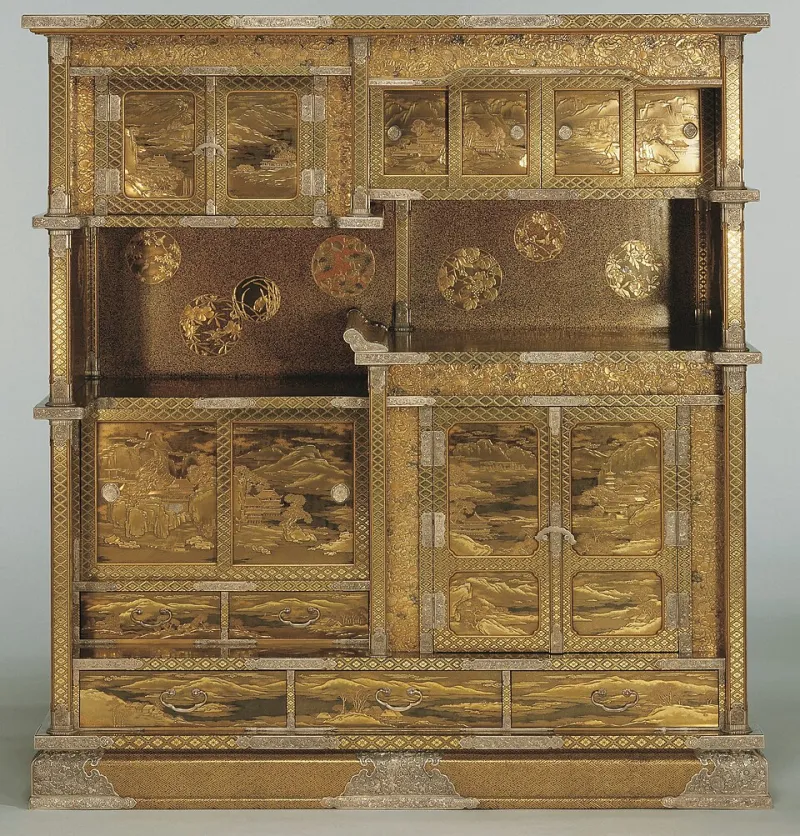
Photo: Khalili Collections, CC BY-SA 4.0, via Wikimedia Commons
American gift-giving has a transaction problem. We give at birthdays and holidays, often under social pressure, frequently with receipts tucked inside, and sometimes with the low-grade anxiety of wondering whether we got it right. The gift is a performance as much as it is an expression — a way of demonstrating that we remembered, that we care, that we're keeping up our end of some unspoken agreement. And then it's over until next time.
It's not that Americans don't care. It's that the system we've built around giving doesn't actually reflect how care works.
Japan has a different system. And communities across the United States that have been engaging with Japanese cultural traditions are starting to notice what that difference feels like in practice.
The Calendar as a Relationship Map
In Japan, gift-giving isn't clustered around a handful of big occasions. It's woven into the rhythm of the year. Ochūgen, traditionally observed in midsummer, is a time to express gratitude to people who've supported you — mentors, colleagues, family members who've gone out of their way for you. Oseibo, in December, serves a similar function as the year closes. These aren't celebrations of the recipient's birthday or a particular milestone. They're acknowledgments of an ongoing relationship and the care that's flowed through it.
Beyond these two anchor traditions, there are smaller, less formalized exchanges tied to seasons, to travel (omiyage, the gift brought back from a trip), to visiting someone's home, to the first harvest of something grown. The giving is constant, proportionate, and relational. It tracks the actual texture of connection rather than just the calendar holidays.
For Americans who encounter this system — often through Japanese American community events, cultural exchanges, or simply through friendships with people who grew up with these traditions — the effect can be quietly disorienting. Not because it's complicated, but because it reveals how thin the American model actually is by comparison.
Obligation as a Feature, Not a Bug
One thing that tends to trip up American observers of Japanese gift-giving is the role of obligation. In the U.S., we've developed a cultural allergy to the idea that gifts should come with strings attached. We want giving to feel free, spontaneous, unconditional. The moment it starts to feel like a duty, we get uncomfortable.
But in Japanese tradition, the sense of mutual obligation — on — is understood differently. It's not a burden. It's the structure of relationship itself. When someone does something for you, you carry a sense of gratitude that eventually finds expression. When you give something, you're not transacting. You're participating in a living system of care that flows in multiple directions over time.
Japanese American cultural organizations that host seasonal events around ochūgen and oseibo often find themselves explaining this distinction to American participants. The question that comes up most often is some version of: "But doesn't it feel forced if you're doing it because you're supposed to?"
The answer, from people who grew up inside the tradition, is usually: not really. The obligation doesn't diminish the sincerity — it gives it a container. You know when to express gratitude because the calendar tells you it's time. That structure doesn't make the gratitude less real. It makes sure it actually gets expressed.
What Gets Lost in Transaction-Based Giving
Think about how most American gift exchanges actually work. Someone has a birthday. You buy something. They thank you. The interaction is complete. There's no assumption that the gift carries forward into the relationship — that it means something about how you see each other, or how you intend to continue showing up.
This transactional model creates a kind of relational flatness. Every exchange is self-contained. There's no accumulation, no ongoing narrative of mutual care. And because giving is concentrated around specific occasions, the people who matter to us most can go months without any tangible acknowledgment of that fact.
Japanese seasonal giving traditions interrupt this pattern by distributing care across the year. A small gift in midsummer. Something brought back from a weekend trip. A seasonal item shared at the first sign of autumn. None of these individually are large gestures. Together, they create a steady current of attention that keeps relationships alive in a way that annual birthday gifts simply can't.
Americans Are Starting to Try It
At Japanese cultural community events around the country — summer festivals, new year celebrations, seasonal craft gatherings — Americans who've been introduced to ochūgen and oseibo often leave curious enough to try something similar in their own lives. Not always with the full formality of the Japanese tradition, but with the underlying intention intact.
A woman in Minneapolis who attended a cultural exchange event hosted by a local Japanese American organization describes starting what she calls "thinking of you" seasons — two points in the year where she reaches out to people she genuinely cares about with something small and specific to them. "It's not a birthday thing or a Christmas thing," she says. "It's just — I thought of you, here's something that made me think of you. It's changed some of my friendships in ways I didn't expect."
What she describes — and what others who've experimented with more intentional, rhythmic giving tend to report — is that the gesture shifts the relationship's center of gravity. It moves the friendship out of the reactive (we connect when something happens) into something more proactive. The relationship becomes a thing that's tended, not just a thing that exists.
The Logistics Are Simpler Than They Look
For Americans worried about the complexity of adopting a seasonal giving practice, it's worth noting that the Japanese tradition isn't actually about grand gestures. Ochūgen and oseibo gifts are often food items — regional specialties, seasonal sweets, quality pantry staples. The point is thoughtfulness and timing, not expense. A jar of good honey from a local producer. A box of fruit from a farm stand. Something that says: I know what season it is, and I thought of you in it.
Japanese American community organizations across the country host events and workshops that walk participants through the traditions in accessible ways — not to impose a foreign cultural framework, but to open up a conversation about what giving could look like when it's rooted in genuine attention rather than obligation-by-occasion.
The Invitation Is Always Open
What makes Japan's seasonal gift-giving traditions compelling isn't their formality. It's their underlying premise: that relationships require tending, and that tending looks like showing up regularly, with intention, in ways the other person can actually feel.
Americans are hungry for this kind of connection. We complain about feeling isolated, about friendships that fade despite good intentions, about not knowing how to maintain closeness across busy lives. The Japanese gift-giving calendar doesn't solve all of that. But it offers something concrete: a rhythm to return to, a reason to reach out, a structure for the care we already want to express.
The invitation, as it turns out, never really expires. It just comes around again with the season.