Empty on Purpose: How Japanese Principles of Space Are Quietly Transforming American Homes
The Room That Stopped You in Your Tracks
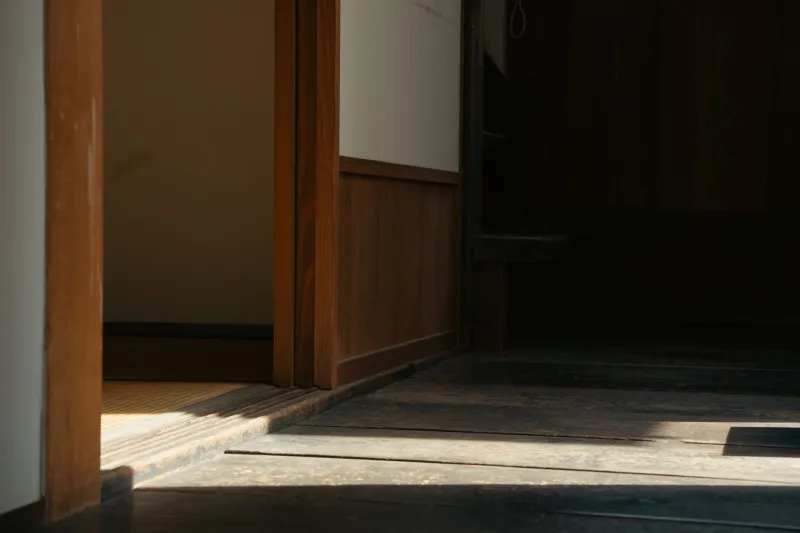
Maybe you've seen it on Instagram. A living room with one low wooden table, a single plant in the corner, and a window letting in a wide rectangle of afternoon light. No gallery wall. No throw pillows. No shelving unit stuffed with decorative objects. Just — space.
And your first reaction was probably complicated. Part of you thought it looked cold. Another part couldn't stop staring.
That pull you felt? It has a name in Japanese design philosophy: yohaku no bi. Loosely translated, it means the beauty of empty space — the idea that what you leave out is just as expressive, maybe more so, than what you put in. It's a concept that's been shaping Japanese art, architecture, and daily life for centuries. And right now, it's quietly making its way into American living rooms, kitchens, and morning routines in ways that go way beyond any decluttering trend.
It's Not Just About Stuff
When most people in the US talk about minimalism, they're usually talking about things. Too many things. Closets too full, garages too packed, Amazon boxes arriving faster than you can recycle them. The conversation tends to start and end with possessions.
But the Japanese aesthetic principles that are actually resonating with Americans right now — yohaku no bi, kanso (simplicity), ma (negative space as a functional element) — aren't really about stuff at all. They're about attention. About what a space is asking of you when you walk into it.
A room full of objects is a room full of decisions. Every item on a shelf is a small demand on your brain: acknowledge me, organize me, dust me, justify me. Strip a room down, and something shifts. The space starts to breathe. And so do you.
Designers and architects working in Japanese-influenced styles talk about this constantly. The goal isn't emptiness for its own sake — it's intentional emptiness. Space that's been considered, not just cleared.
What Americans Are Actually Doing With This
Across the country, people are taking these ideas seriously — and personally. In Portland, homeowners are working with designers to reimagine open-plan spaces not as entertainment hubs but as places for quiet. In Chicago, apartment dwellers are pulling furniture out of corners, letting walls do less, and reporting that their anxiety at home has genuinely dropped. In smaller cities and suburbs, the influence is showing up in unexpected ways: fewer holiday decorations, simpler table settings, a growing resistance to the "more is more" logic that's driven American interior design for decades.
Some of this is showing up in community spaces, too. Japanese American cultural centers around the country have long modeled this approach in their architecture and event spaces — rooms that feel calm and deliberate, where the design itself slows you down a little. People notice. They ask questions. They go home and start moving furniture.
It's worth saying: this isn't about copying Japanese aesthetics wholesale or pretending a ranch house in Ohio is a Kyoto tea room. The people most thoughtfully engaging with these ideas are adapting them — bringing in the principle of intentional space while keeping their own cultural context intact.
Kanso and the Art of Subtracting
Kanso is one of those ideas that sounds simple until you try to live it. The word translates roughly as simplicity or elimination of clutter, but in practice it means something more specific: the deliberate removal of anything that doesn't serve a purpose or express a clear intention.
In design terms, that might mean a kitchen counter with nothing on it except what you use every single day. In life terms, it might mean a calendar with fewer commitments, a wardrobe with fewer choices, a weekend with fewer plans.
The interesting thing happening in America right now is that people aren't arriving at kanso through aesthetics. They're arriving at it through exhaustion. The constant noise of modern life — notifications, options, obligations — has pushed a lot of people toward a desperate desire for less. Japanese design philosophy is giving that desire a framework and a language.
And once people have the language, they start applying it everywhere. The simplification of a bookshelf becomes the simplification of a social life. The decision to own fewer dishes becomes the decision to attend fewer events that don't actually matter to you. It compounds.
The Harder Conversation
Here's the part that doesn't get talked about as much: choosing emptiness is a privilege, and it's worth naming that. For many American families — especially immigrant families, working-class households, people who grew up without enough — a full home isn't clutter. It's comfort. It's security. It's cultural expression.
The Japanese aesthetic tradition itself is more nuanced than the Western minimalist movement tends to acknowledge. Wabi-sabi, for instance, finds beauty in imperfection and the passage of time — worn surfaces, irregular shapes, objects that show their age. That's a very different thing from the sleek, expensive blankness that sometimes gets marketed as Japanese-inspired design.
The communities doing the most interesting work with these ideas are the ones holding that tension honestly. They're not selling a look. They're asking a genuine question: what does this space need to be, and what can we let go of so it can be that?
What Space Gives Back
People who've made these shifts — who've deliberately created emptier, quieter spaces in their homes and lives — describe similar things. They say they notice more. They say they feel less reactive. They say their homes feel like theirs in a way they didn't before.
That's not nothing. In a culture that's been telling us for generations that adding is the answer — more stuff, more activity, more stimulation — the act of removing something and leaving the space open is almost countercultural.
Yohaku no bi says the empty space isn't waiting to be filled. It's already doing something. Maybe that's the idea Americans need most right now — not another thing to bring home, but permission to leave the corner bare and see what happens when you stop trying to complete the room.